Last updated October 30, 2026
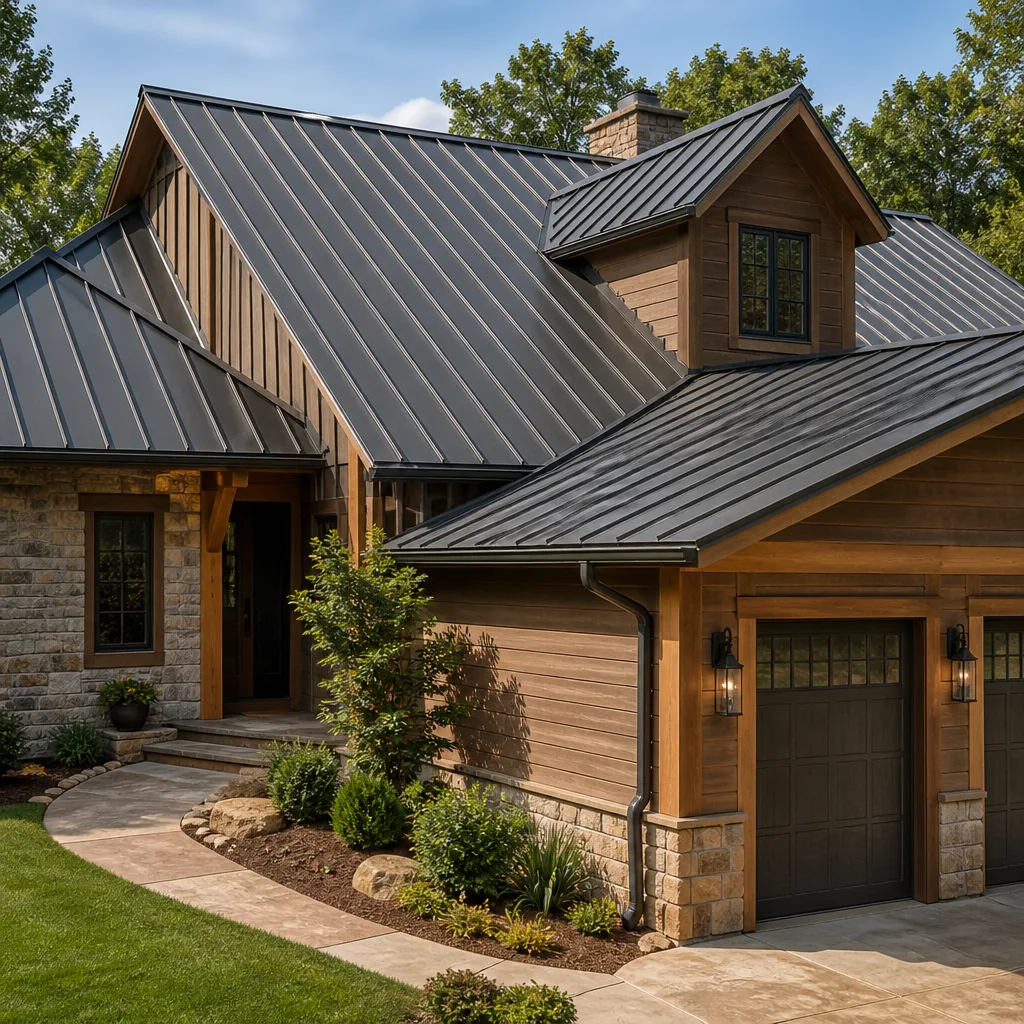 Metal roofing
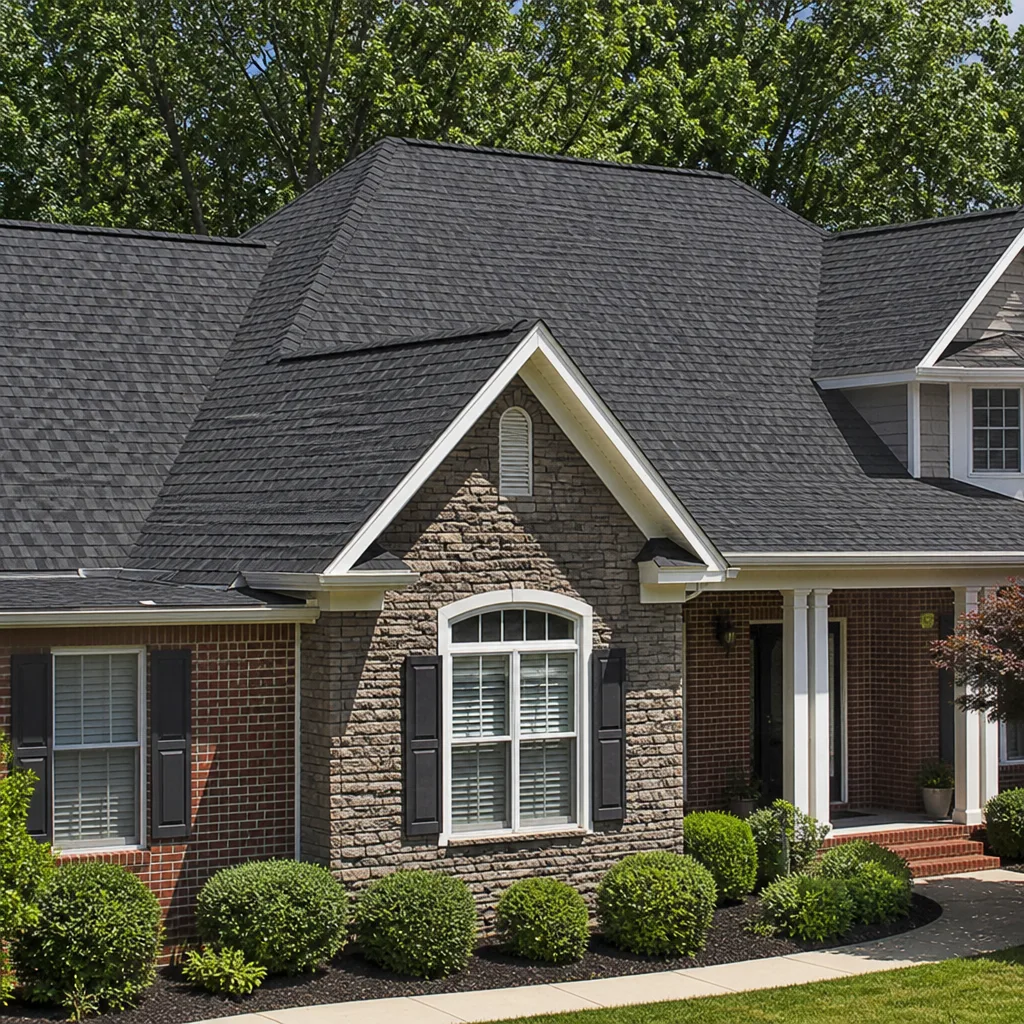 Architectural shingles
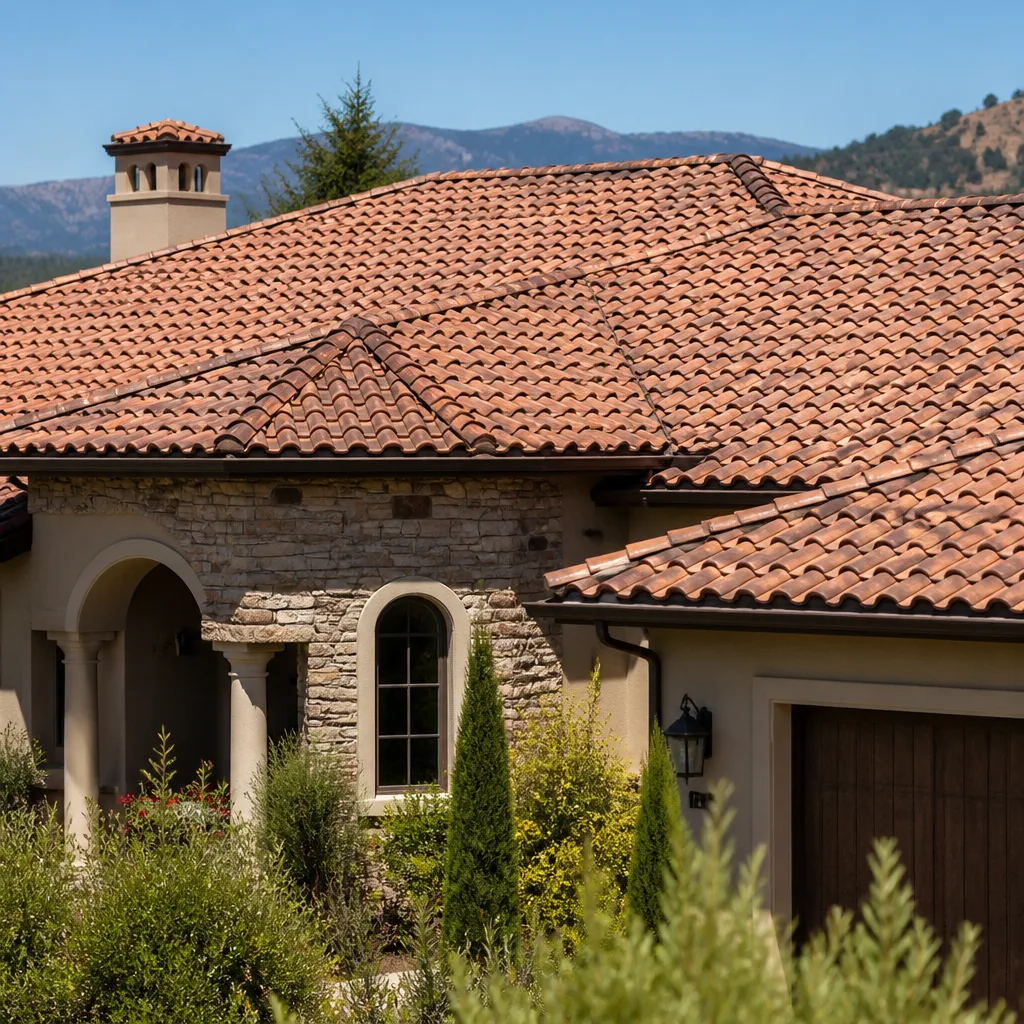 Tile roofing
 GAF
 Owens Corning
 Flat & low-slope
Free roof inspection with deck photos before we talk money - GAF and Owens Corning certified installation
How to Hire a Roofing Contractor in Fontana: A Step-by-Step Guide
A contractor can hold a valid California roofing license, carry full insurance, and still void your shingle warranty on day one because they were never certified by the manufacturer whose product they installed. That gap between state licensing and manufacturer certification is exactly where most post-installation disputes in Fontana begin. This guide walks you through every verification step, including the ones most hiring articles skip, so you can hire with the same level of confidence whether you’re dealing with a small repair or a full reroof.
Quick Answer
To hire a roofing contractor in Fontana, verify their CSLB license is active with a C-39 classification, confirm they carry both workers’ compensation and general liability insurance, check that their manufacturer certifications are current with the specific brand they’re proposing, and get a written contract that spells out scope, permits, debris disposal, and warranty terms before any money changes hands. For a deeper dive into ongoing care, see our Roof Repair Maintenance Checklist for Fontana Homeowners.
Styles & brands we work with
Table of Contents
- Step 1: Verify the CSLB License and C-39 Classification
- Step 2: Confirm Insurance Coverage That Actually Protects You
- Step 3: Cross-Check Manufacturer Certifications Directly
- Step 4: Get Multiple Quotes and Compare Them Line by Line
- Step 5: Read the Contract Before You Sign Anything
- Red Flags Specific to the Inland Empire Market
- How to Evaluate a Bid That’s Suspiciously Low
- Warranty Language That Matters in Fontana’s Climate
Step 1: Verify the CSLB License and C-39 Classification
Every legitimate roofing contractor in California must hold an active license from the Contractors State License Board, and that license needs to carry the C-39 roofing classification. A general contractor with a B classification cannot legally pull roofing permits in most Fontana jurisdictions, and if a permit gets pulled under the wrong classification, you’re the one who gets stuck with the liability if the work fails inspection.
Here’s the verification sequence we recommend, and it takes about five minutes total:
- Go to the CSLB website and search the contractor by name or license number.
- Confirm the license status reads “Active” – not “Expired,” “Suspended,” or “Pending.”
- Look for the C-39 classification specifically. If it’s missing, ask why before proceeding.
- Check the license’s original issue date. A license issued three months ago doesn’t automatically disqualify a contractor, but it tells you how much California-specific roofing work they’ve actually completed under that credential.
- Look at any CSLB enforcement actions, complaints, or arbitration awards tied to the license. Every contractor accumulates some feedback over a long career; what matters is whether unresolved judgments or repeated similar complaints exist.
Fontana sits in San Bernardino County, which has its own permitting process through the city building department. A properly licensed C-39 contractor knows exactly which permits apply to a reroof in your neighborhood, and they’ll include permit fees and inspection scheduling in the written estimate rather than treating permits as an afterthought.
Step 2: Confirm Insurance Coverage That Actually Protects You
License verification tells you the contractor is legally allowed to work. Insurance verification tells you who pays if something goes wrong while they’re on your roof. In the Inland Empire, where summer temperatures routinely exceed 100 degrees and wind events can turn a simple repair into a liability claim, this step is not optional.
Ask for a certificate of insurance issued directly from the insurance carrier, not a photocopy the contractor hands you. Then call the carrier or check the policy number online to confirm the policy is active on the day you’re checking. Two policies matter:
- Workers’ compensation insurance: If a crew member falls off your roof and the contractor doesn’t carry workers’ comp, you can be held liable for medical costs because the injury happened on your property. In California, roofing contractors with employees are required to carry this policy.
- General liability insurance: This covers damage to your property caused by the contractor’s work. A skylight accidentally broken during tear-off, a gutter torn loose by a ladder, water intrusion from an improperly installed underlayment – liability insurance handles these.
In our experience across Fontana and the surrounding cities, we’ve seen homeowners accept insurance claims at face value and discover after a problem that the policy had lapsed or the coverage amount was too low to handle a full roof repair. Verify every time. It’s a phone call that can save you tens of thousands.
Step 3: Cross-Check Manufacturer Certifications Directly
Here’s the part most hiring guides skip entirely: a contractor’s claim of being a “GAF certified roofer” or a “CertainTeed certified installer” means nothing until you verify it on the manufacturer’s own portal. Certification status changes. Contractors get dropped from programs for installation failures. Others let certifications lapse and keep the old logo on their truck and website.
The manufacturers we work with – GAF, CertainTeed, and Owens Corning, among others – each maintain a public installer locator on their website where you can search by ZIP code and company name. The process takes ten minutes:
- Identify the specific brand the contractor is proposing for your roof.
- Visit that manufacturer’s website and find their installer locator or contractor finder page.
- Search by the contractor’s company name in Fontana or by your ZIP code.
- Confirm the certification tier matches what the contractor claimed. GAF has different levels like Certified and Master Elite. CertainTeed has Select ShingleMaster and ShingleMaster tiers. Owens Corning has Preferred and Platinum Preferred.
- If the contractor doesn’t appear in the locator, ask them directly why their name isn’t there before signing a contract.
Why does this matter so much in Fontana specifically? Because the San Bernardino County climate demands specific installation practices, and manufacturers only honor enhanced warranty coverage when the installer holds current certification. That means workmanship coverage beyond the contractor’s own labor warranty. A C-39 license proves legal qualification. Manufacturer certification proves product-specific training and brand accountability. You want both.
At Barnwood Roofing, we carry certifications and installer status with seven major brands. That breadth exists for one reason: it lets us recommend the right product for your specific roofline, sun exposure, and budget without pushing you toward a single brand we happen to hold. Most Fontana contractors hold certifications with one, maybe two manufacturers. That’s not a disqualifier, but it does mean their product recommendations will naturally skew toward what they’re certified to install, not necessarily what your home actually needs.
Step 4: Get Multiple Quotes and Compare Them Line by Line
The standard advice says get three quotes. That’s fine as a starting point, but three quotes that list three different scopes of work are useless for comparison purposes. For help understanding what those numbers should include, check our Roofing Cost Breakdown: The Fontana Homeowner’s Reference for 2026. The point isn’t collecting numbers. It’s collecting comparable numbers attached to comparable work.
When you request quotes in Fontana, give each contractor the same written list of what you want addressed. Be specific enough that scope differences show up quickly:
- Does the estimate include tear-off and disposal of the existing roof, or is it an overlay?
- Which underlayment product is specified by name?
- Which shingle or tile product is specified, including brand and specific product line?
- Does the estimate include flashing replacement at all penetrations, valleys, and wall intersections?
- Are gutter and downspout conditions acknowledged?
- Does the estimate break out permit fees as a distinct line item or lump them elsewhere?
- How many square of roofing is the contractor estimating, and does that square count appear on the written quote?
- Does the quote mention how the crew will protect landscaping and clean up fasteners, old underlayment, and debris?
A Fontana roofer who’s done this work in this specific market knows what’s required by local code and what the typical two-story track home in the Southridge or northern Fontana neighborhoods needs in terms of ventilation and underlayment. If a quote lacks these specifics, ask for the detail before you consider it a real bid.
Step 5: Read the Contract Before You Sign Anything
In California, all contracts for home improvement work over $500 must be in writing, and the CSLB has specific requirements about what that contract needs to include. Beyond the legal minimum, here’s what a thorough roofing contract in Fontana should spell out:
Scope of Work Specificity
Vague language like “install new roof” or “repair damaged areas” is a blank check for disputes. The contract should describe product names, quantities in square or square feet, specific areas of repair, and exclusions. If the contractor tells you something verbally and it’s not in the contract, assume it won’t happen.
Debris Disposal Terms
Tear-off waste from a reroof is substantial. The contract should state who provides the dumpster or trailer, where it sits during the work, who pays for disposal, and what site condition the crew leaves behind at the end of each workday and at project completion. We’ve seen Fontana homeowners discover a dumpster on their driveway for three weeks because the disposal terms were never written down.
Permit Responsibility
The contract should identify who pulls the permit, who pays for it, and who schedules the inspection. In Fontana, roof permits go through the city building department, and the inspector needs to approve both the sheathing after tear-off and the final completed roof. The contract should reflect that two-stage inspection reality.
Warranty Transfer Language
If you sell your Fontana home in the next five to ten years, does the roof warranty transfer to the new owner? Some contractor workmanship warranties do transfer, some don’t. Manufacturer warranties often have specific transfer provisions. The contract should state which warranties apply, their durations, and whether they transfer. If this section is missing, you haven’t been given the full picture.
Payment Schedule and Lien Release
California law limits the down payment on a home improvement contract to $1,000 or 10 percent of the total, whichever is less. Any contractor asking for more upfront is violating CSLB rules. The contract should also include a provision for a mechanics lien release at final payment, protecting you from a subcontractor or supplier placing a lien on your home if the contractor doesn’t pay them.
Red Flags Specific to the Inland Empire Market
Every region has its own set of contractor problems, and Fontana’s position at the crossroads of the I-10 and I-15 corridors gives it a few distinct ones. Here’s what we’ve watched develop over years of serving this market:
- Storm chasers after Santa Ana wind events: Strong winds hit the Inland Empire and within days, roofing crews from other states set up shop, file transient business licenses, and work the neighborhoods with stories of wind damage they’ve “spotted from the street.” Check the license’s business address. If it’s from another state or was established last month, be suspicious.
- Pressure-urgency tactics: Any contractor who tells you to sign today because “prices go up next week” or “we’re only in this neighborhood for a limited time” is working a sale, not your roof. Fontana homeowners we’ve met who signed under pressure consistently report the same thing: the urgency was manufactured, and the roof work was average at best.
- The “we’ll handle the insurance” pitch: This isn’t inherently wrong, but some contractors position themselves as insurance claim specialists and then inflate the claim to create margin. If a contractor tells you they’ll “cover your deductible,” that’s insurance fraud under California law, and you’re the complicit party in writing.
- Out-of-area plates on the crew trucks: A licensed contractor based in Fontana or nearby cities is not the same as an out-of-state crew operating under a borrowed license number. Ask where the actual installation crew is based and how long they’ve worked for the contractor.
How to Evaluate a Bid That’s Suspiciously Low
A bid that comes in 20 or 30 percent below the others isn’t proof that a contractor is more efficient. In roofing, efficiency differences between competent crews are narrow. A meaningfully lower bid almost always means something has been removed from the scope, even if no line item says so. Here’s what’s typically missing:
- The tear-off: A second layer of shingles installed over the first is cheaper in the short term and more expensive in the long term. Fontana’s heat accelerates shingle wear, and a roof that can’t breathe fails faster. If the contractor’s bid doesn’t clearly include tear-off, it may not include any.
- The underlayment: California building code requires specific underlayment standards. A bid that doesn’t name the underlayment product may be budgeting for the thinnest option allowed rather than the one that makes sense for your roofline.
- The flashing: New flashing at every penetration, valley, and wall transition is material and labor cost. Skipping re-flashing and re-using old metal saves money today and creates leak points in three to five years.
- The permit: If permit fees and inspection scheduling aren’t in the bid, the contractor may be planning to work unpermitted. That’s a legal problem for you at sale time and an insurance problem if the roof fails.
- The labor quality: Undercutting crew pay produces turnover and rushed work. The crew that shows up for the low bid may not be the crew that started your neighbor’s roof last month.
When a bid looks too good, ask the contractor to walk you through exactly what’s included and what’s not. If the explanation doesn’t add up or they get defensive, walk away.
Warranty Language That Matters in Fontana’s Climate
Fontana gets about 14 inches of rain per year and more than 270 sunny days. The sun is the bigger enemy of roofing materials here, and warranty coverage that sounds generous on paper may be meaningless when you read the fine print about UV damage, thermal cycling, or wind uplift ratings.
Two warranty types apply to most reroofs, and they’re completely separate:
- Manufacturer material warranty: This covers defects in the shingle or tile itself, like premature granule loss, cracking, or delamination. Coverage depends on the product line and whether the installer held proper certification at the time of installation. This is why Step 3 matters so much.
- Contractor workmanship warranty: This covers installation errors – improperly seated nails, incorrect flashing laps, insufficient attic ventilation, sloppy sealant work. The contractor, not the manufacturer, stands behind this. The term should be in the contract, and it should be specific enough to mean something. “We stand behind our work” is not a warranty. “Workmanship defects repaired at no cost for five years from completion” is.
Boral’s concrete and clay tile products, for example, carry different warranty structures than GAF’s asphalt shingle lines. CertainTeed and Owens Corning each have their own fine print around wind coverage and transferability. A Fontana homeowner selecting a product should ask the contractor to explain the specific warranty attached to the specific product being quoted, not the generic marketing language on the brochure.
Local Code and Climate Factors That Shape Fontana Roofing Decisions
Most hiring guides are written generically, but Fontana homes face a particular set of conditions that should shape your material and contractor decisions. Understanding these makes you a better buyer and helps you evaluate whether a contractor actually knows this market.
Heat and Sun Exposure
Fontana’s summer highs regularly push past 100 degrees, and roof surface temperatures run 50 to 60 degrees hotter than the air. This thermal cycling shrinks and expands roofing materials daily for months at a time. The right shingle for a Fontana roof is not the same as the right shingle for a coastal home in San Diego. Lighter-colored shingles and tile with documented solar reflectance ratings perform measurably better here, and the manufacturer certification discussion in Step 3 becomes even more relevant because some installers lack the training to properly ventilate an attic for this much heat.
Santa Ana Wind Events
The same geography that makes Fontana a logistics hub between the 10 and 15 freeways also funnels wind through this region. Roofs here need materials and installation methods rated for the wind uplift pressures specific to the Inland Empire. Ask your contractor what wind rating the proposed shingle carries and whether their installation method matches the manufacturer’s requirements for that wind zone. The answer tells you a lot about how seriously they approach this market.
Permits and Inspections in Fontana
The city of Fontana requires permits for roof replacement and for repairs that exceed a specific threshold of roof area. The permitting process typically involves two inspections: one after the old roof comes off and any damaged sheathing is replaced, and one after the new roof is fully installed. A contractor who treats this process as routine will mention it without being asked. One who hopes you never find out about the permit requirement is a red flag.
Barnwood Roofing handles Roof Replacement in Fontana with permits pulled, inspections scheduled, and every inspection passed. We’d rather spend the extra hour coordinating with the city building department than leave you with an unpermitted roof that becomes your problem at resale.
What a Good Roof Inspection Should Tell You
Before you hire anyone for a repair or replacement, the assessment has to be honest. That’s the entire foundation of a good roofing decision, and it’s also where homeowners in Fontana get misled most often by contractors who only want to sell full replacements.
A legitimate roof inspection should include:
- Documentation of existing condition, including photos with dates and roof locations identified
- Measurement of the roof area and identification of any visible sagging, ponding, or uneven planes
- Assessment of shingle or tile condition, including granule loss, cupping, curling, or cracking
- Examination of flashing at chimneys, vents, skylights, valleys, and wall-to-roof intersections
- Inspection of the attic for signs of water intrusion, proper intake and exhaust ventilation, and adequate insulation
- Gutter and downspout evaluation, since water management starts at the edge of the roof
- A written summary that distinguishes between items needing immediate attention, items that can wait, and items that are fine
The key phrase is “written summary.” If a contractor does a walkaround and then gives you a verbal pitch for a full replacement without any documentation, ask for the written report. If they won’t provide one, the inspection was a sales call, not an assessment. This is exactly why Roof Inspection in Fontana exists at Barnwood Roofing as a standalone service. You get the assessment, the photos, and the written summary whether you ever hire us for another dollar of work or not.
The Repair vs. Replacement Decision
Fontana homeowners face this decision constantly, and the honest answer depends on more than roof age. A 15-year-old roof with a single leak around a plumbing vent is usually a repair. A 12-year-old roof with failing flashing at three locations, granule loss across entire slopes, and signs of inadequate ventilation may be at the point where patching becomes futile.
What we tell homeowners is this: if the specific problem areas can be identified and corrected, repair is the right call. If the problems are systemic – meaning the materials are reaching end of life across the whole roof surface, not just in isolated spots – then a replacement is the only financially sensible path. Continued repairs on a roof that’s failing everywhere just delays the inevitable and costs more in total.
The financial incentive question matters here too. A contractor who only does replacements will naturally see every roof problem through the lens of replacement. We perform Roof Repair in Fontana as a core service, not a courtesy we offer while pushing toward a bigger job. If your roof genuinely needs replacement, we’ll tell you that and show you why with the inspection documentation. If it needs a $900 repair, we’ll tell you that instead.
See the difference
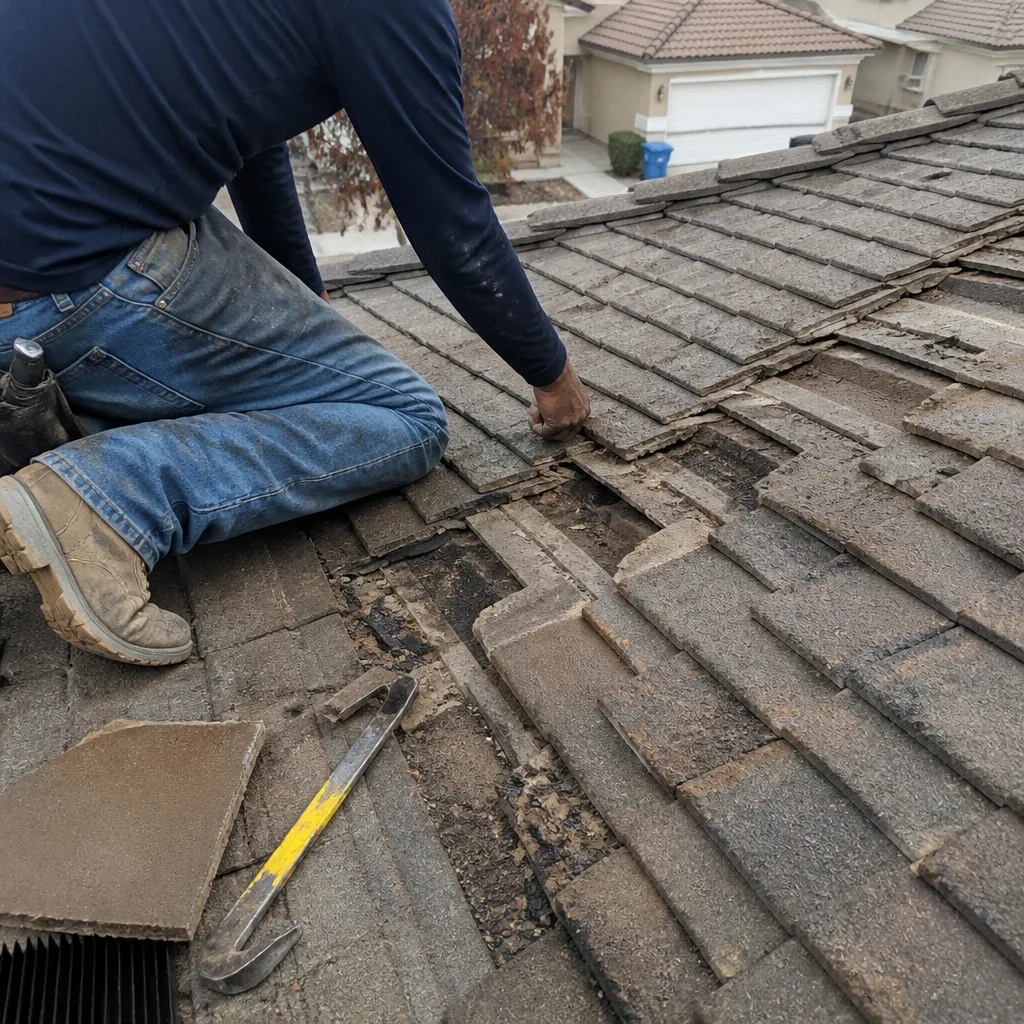 Before
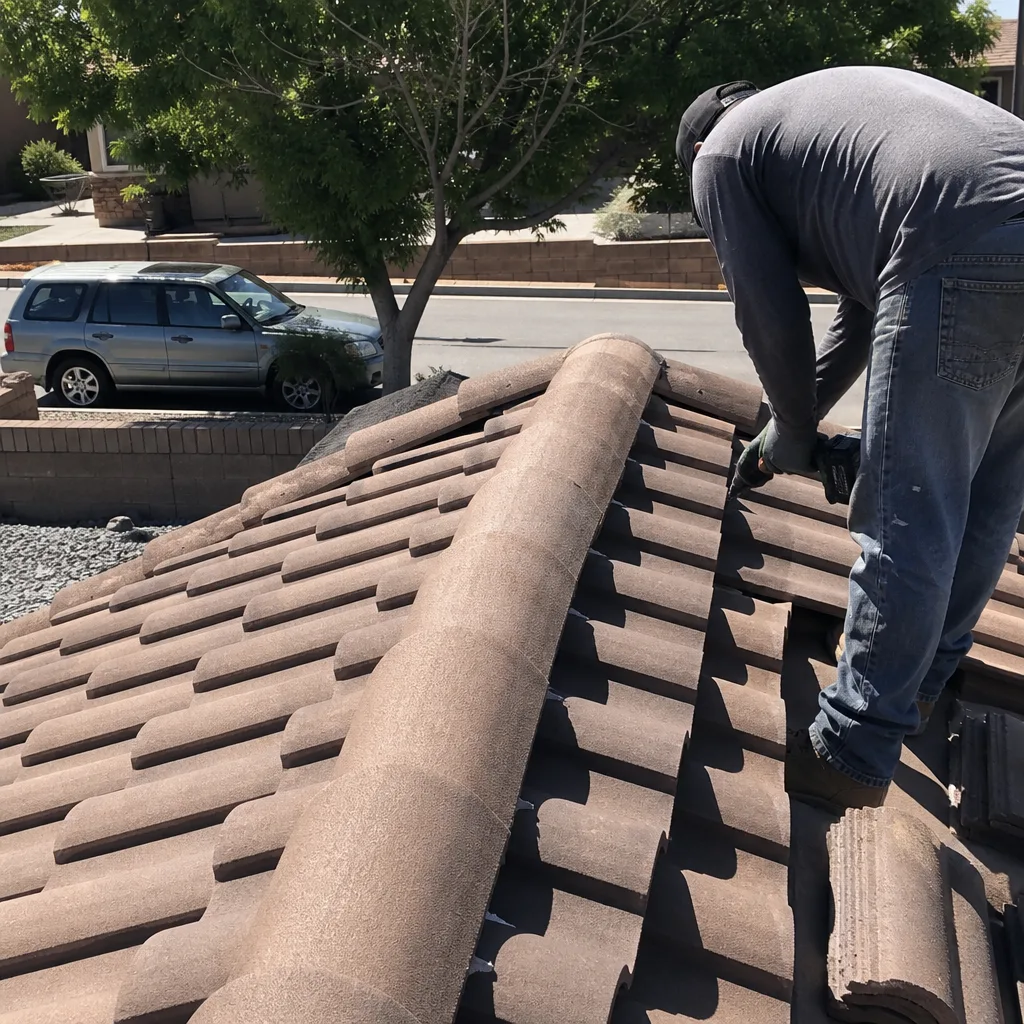 After
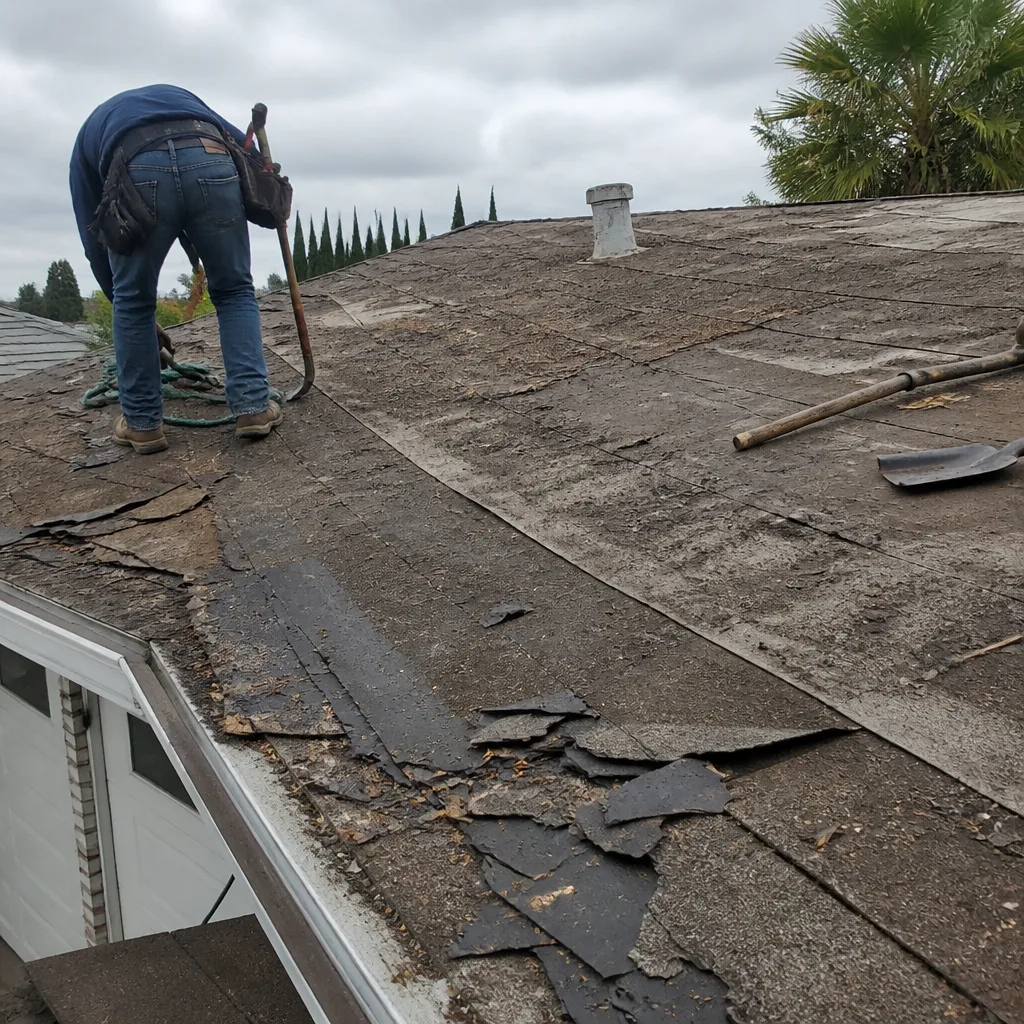 Before
 After
 Before
 After
Common Mistakes to Avoid
- Hiring based on price alone without reading the scope. Two bids can differ by $4,000 because one includes tear-off, new flashing, and permits while the other doesn’t. You didn’t save $4,000; you accepted a different scope of work.
- Skipping the manufacturer certification check. A contractor can be fully licensed and insured while still voiding the material warranty you’re counting on because they aren’t certified with the brand they sold you.
- Signing a contract with vague scope language. “Repair roof as needed” gives the contractor full discretion over what gets done and what gets billed. If it’s not specific, it’s not a contract.
- Paying more than the legal deposit limit. California caps the down payment on home improvement contracts at 10 percent or $1,000, whichever is less. Any contractor asking for more upfront is outside the law, no matter how they explain it.
- Ignoring the permit question. Unpermitted roof work in Fontana becomes a problem at home sale, in insurance claims, and in any subsequent dispute about work quality. If the contractor suggests skipping the permit, that’s your signal to end the conversation.
- Trusting a storm chaser’s urgency. Strong winds bring out crews with out-of-area plates and high-pressure timelines. A real Fontana roofer has a physical presence, a local history, and no reason to demand a signature today.
- Not confirming insurance directly with the carrier. A certificate of insurance can be forged or outdated. The five-minute call to the insurance company is your protection against being personally liable for a worker injury.
When to Call a Professional
Some roof work is genuinely dangerous, and even experienced homeowners should stay off the roof for anything beyond cleaning gutters from a ladder. If you have a roof leak that’s already penetrated the interior, don’t wait – water moves fast through insulation and drywall, and the repair scope grows daily. If you see sagging roof planes, that’s a structural concern that needs immediate professional assessment. If high winds have lifted shingles or exposed seams, you need an evaluation before the next rain event. Barnwood Roofing offers free estimates in Fontana – call (855) 382-1073 and we’ll send someone out to take a look, document what we find, and give you an honest written answer about what needs to happen and what can wait.
Frequently Asked Questions
Most complete roof replacements on Fontana homes run between $9,000 and $22,000 depending on roof size, material choice, tear-off requirements, and the condition of the underlying sheathing. Asphalt shingle is the most common and least expensive material, concrete tile runs higher, and metal or premium product lines run higher still. For an exact number for your specific home, call (855) 382-1073 for a free written estimate – we’ll break down the line items so you see exactly where the money goes.
Permits are required for full roof replacements and for repairs that exceed a certain square footage of the roof surface. The city of Fontana building department handles this process, and a properly licensed contractor will know whether your specific job needs a permit and will include the permit cost in the written estimate. If a contractor suggests skipping the permit to save money, that’s a red flag for both legality and work quality.
Not without verifying the claim yourself. Insurance covers specific categories of damage, usually from documented weather events or sudden incidents, not general wear and aging. A contractor who says they’ll handle everything with your insurance may be positioning themselves to inflate the claim, and if a contractor offers to cover your deductible, that’s insurance fraud. Call your insurance company directly and ask what your policy covers before agreeing to any plan built around an insurance claim.
A typical single-family home roof replacement in Fontana takes two to five working days from tear-off through final inspection. Weather delays happen, and the city inspection schedule adds time. A contractor promising a one-day complete reroof is either cutting corners or not including tear-off and proper underlayment in the plan. Fast isn’t a virtue in roofing; correct is.
A manufacturer warranty covers defects in the roofing material itself – premature granule loss, cracking, delamination – and is only valid if the installer held the proper manufacturer certification at installation time. A contractor workmanship warranty covers installation errors and is only as good as the contractor’s willingness and ability to honor it. You need both, and both should be specified in writing.
Not necessarily. A functioning roof with documented remaining life is enough for most buyers. What matters more is whether the roof passes a home inspection and whether you can produce records showing what’s been done and when. If the roof has known problems, you may get more value from replacing it before listing than from negotiating a credit with a buyer who’s scared off by roof uncertainty. Call (855) 382-1073 for an honest assessment of what your specific roof needs before you decide.
The Bottom Line
Hiring a roofing contractor in Fontana comes down to verification, not trust. Verify the CSLB license with C-39 classification. Verify the insurance policies directly with the carrier. Verify manufacturer certifications on the manufacturer’s own portal. Get written quotes with detailed scopes, read the contract line by line, and don’t ignore permit requirements. The contractor you hire should welcome every one of these checks, because a contractor with nothing to hide has no reason to push back on any of them. We’ve built Barnwood Roofing home on exactly that principle: inspection first, honest recommendation second, and work we’d put our name on every single time.
Written by the team at Barnwood Roofing, serving Fontana since 2013.