


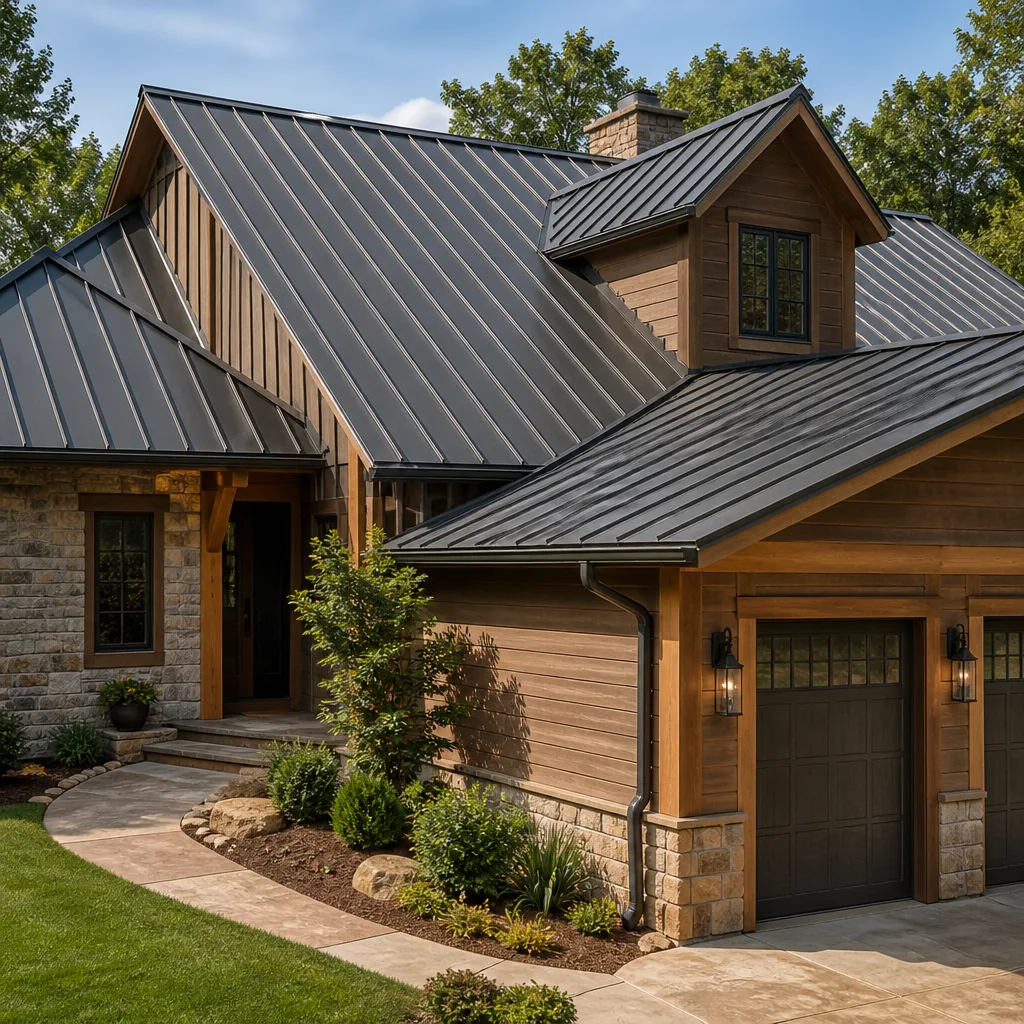
 Metal roofing
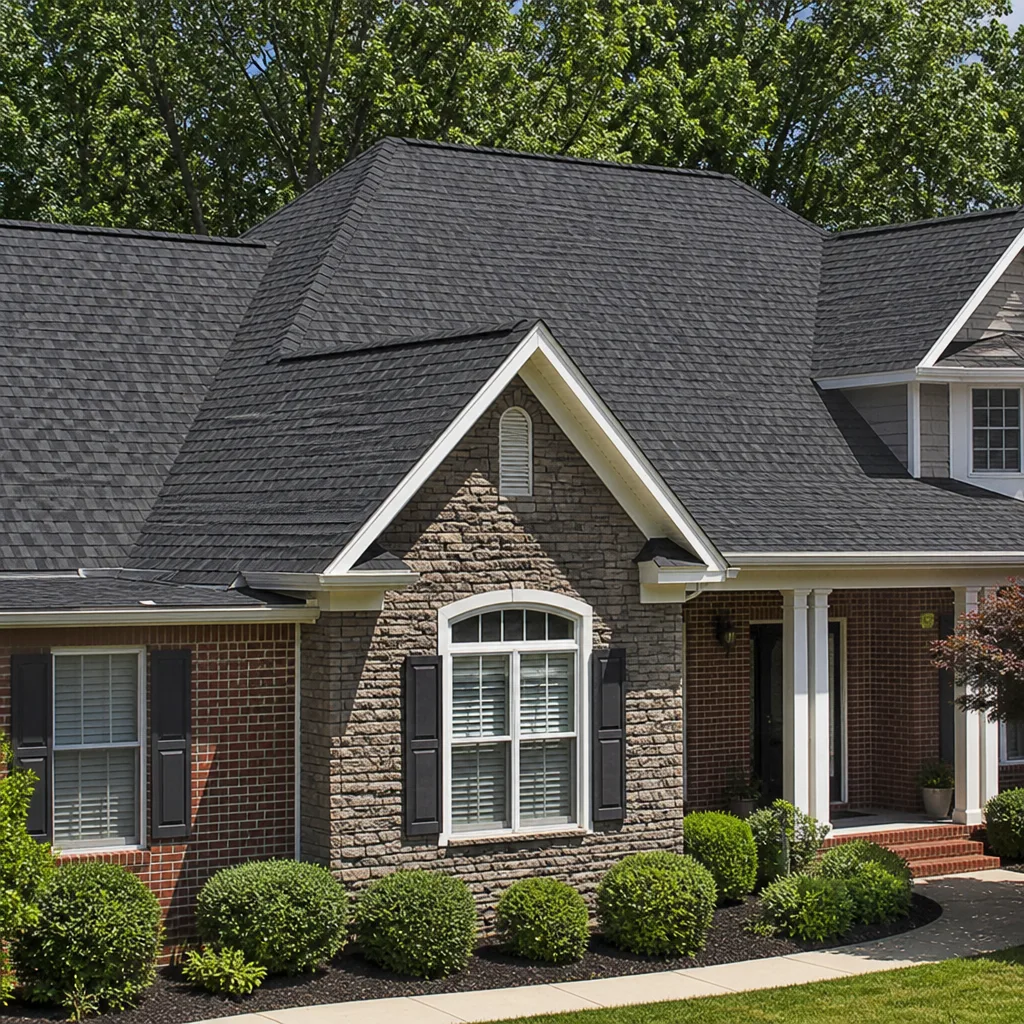 Architectural shingles
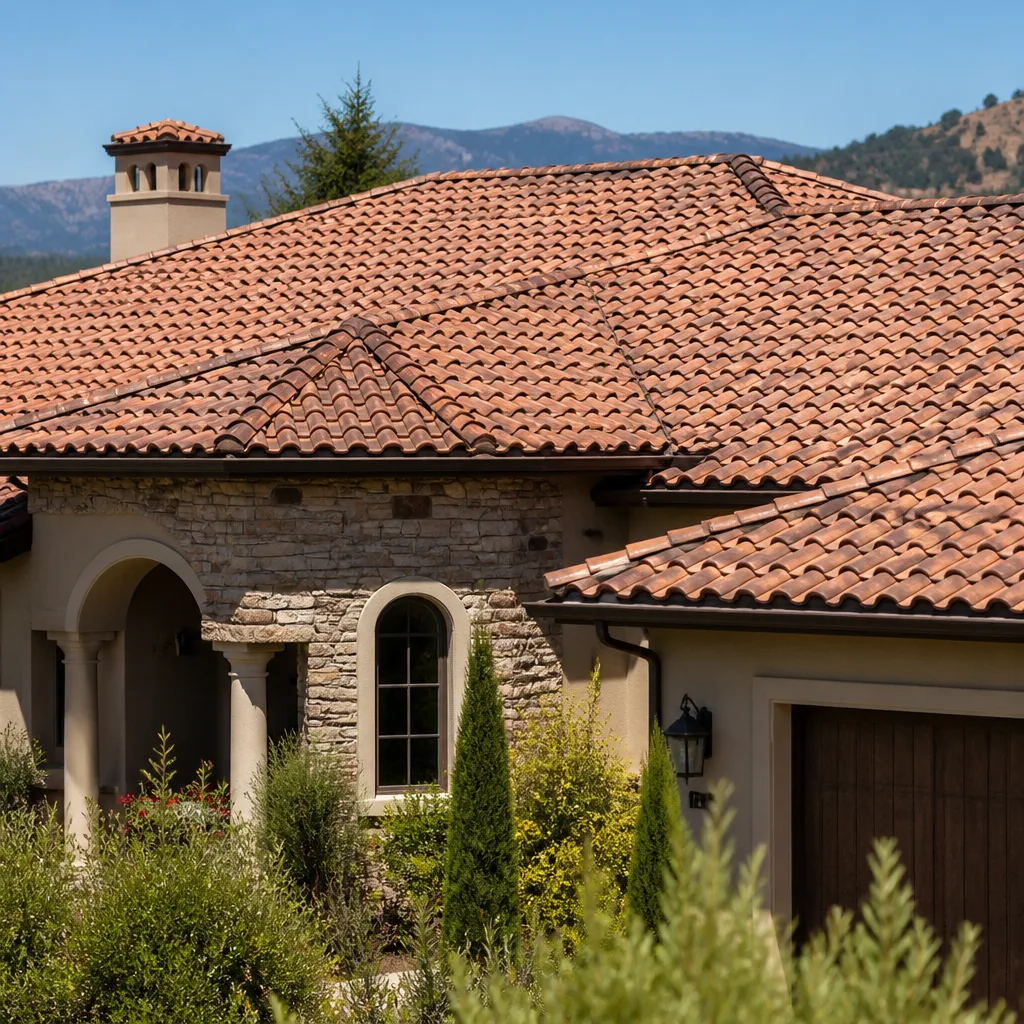 Tile roofing
 GAF
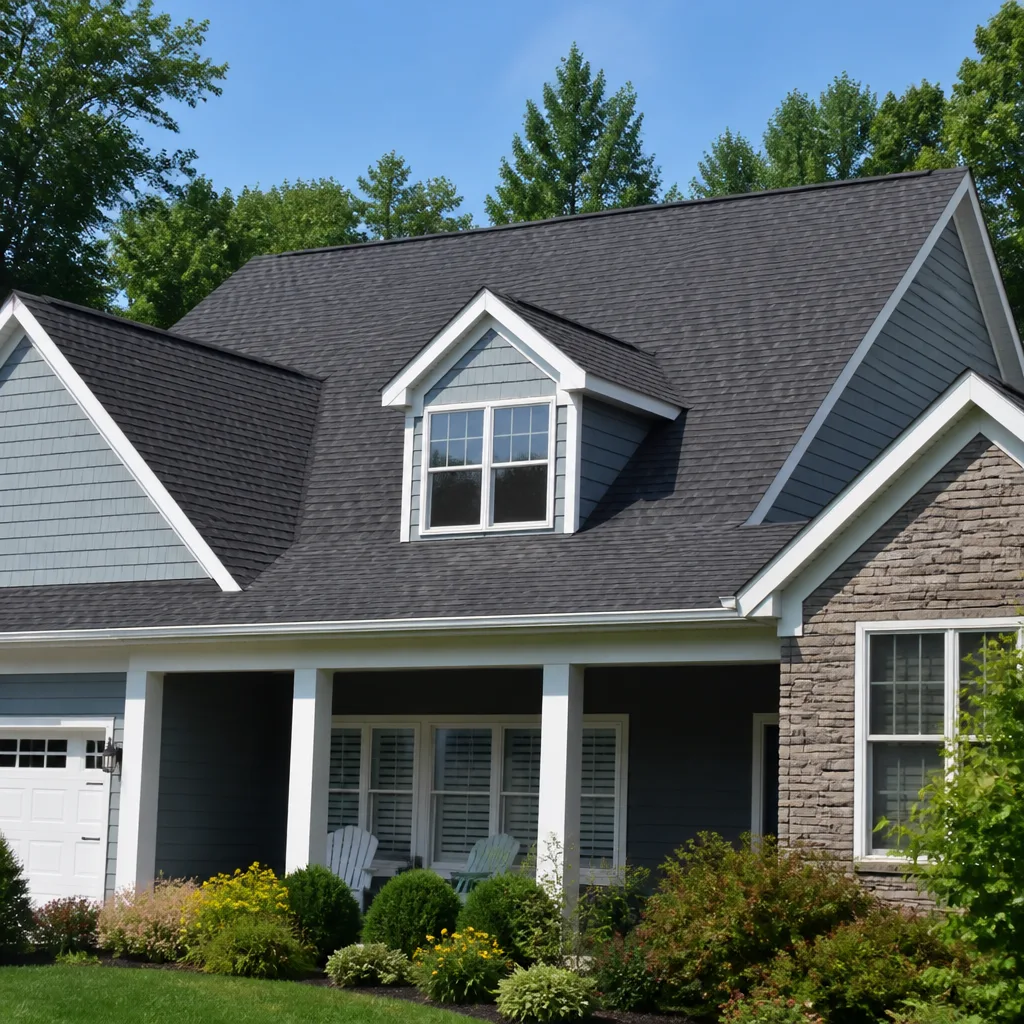 Owens Corning
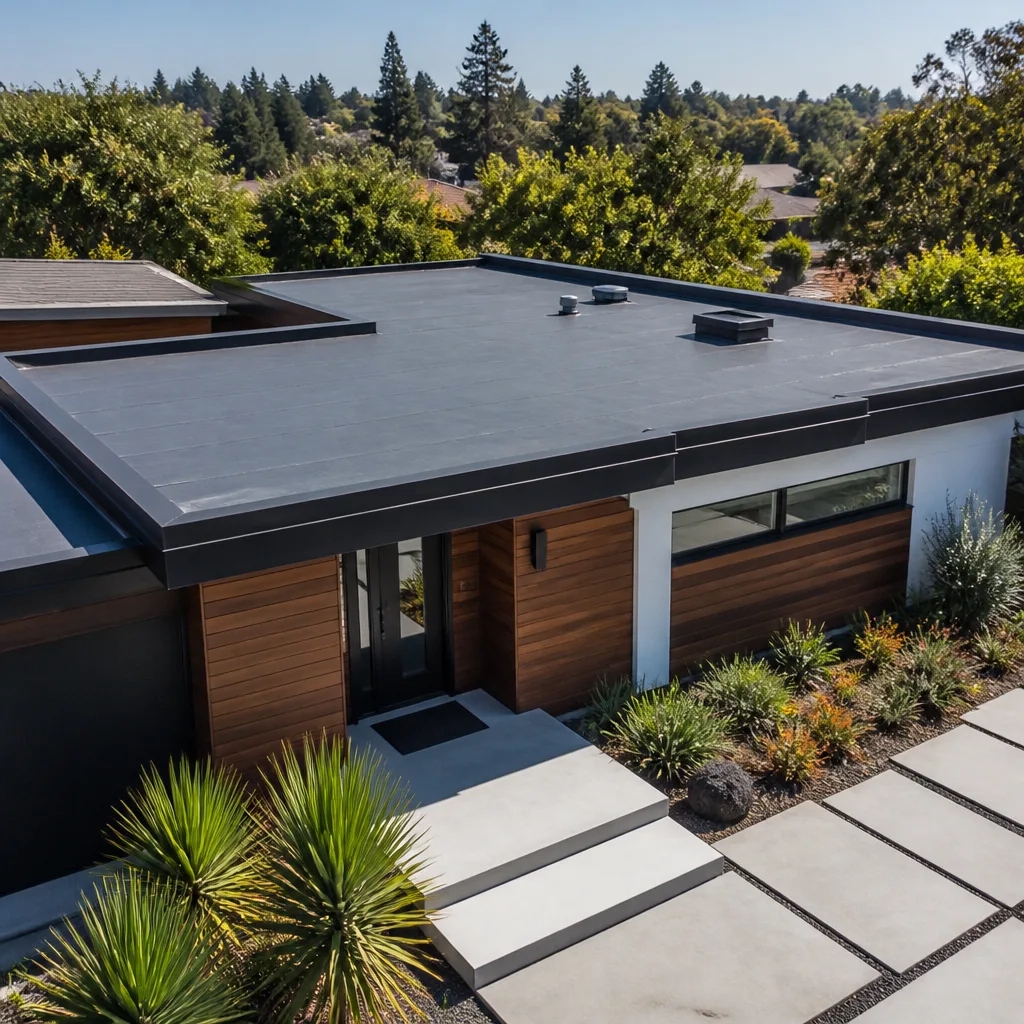 Flat & low-slope
Free roof inspection with deck photos before we talk money - GAF and Owens Corning certified installation
Fast, Reliable Roof Replacement Across San Bernardino
A full roof replacement in San Bernardino typically runs between $9,800 and $24,500 depending on the home’s size, roof pitch, and the material you choose. Most tear-off and reroof jobs on the single-story tract homes we see throughout the 92401 through 92404 ZIP codes take three to five working days. We’ve been working on San Bernardino roofs long enough to know the houses, the heat, and the wind patterns that shorten a roof’s life here. If you’re looking at granule loss, curling shingles, or leaks after a Santa Ana event, call us at (855) 382-1073 for a straight assessment before you commit to anything.
Why Barnwood Roofing Is San Bernardino’s Preferred Roof Replacement Company
Barnwood Roofing is led by Ruben Calloway, a roofing contractor who built his reputation on telling San Bernardino homeowners the truth, even when the truth is that a repair will buy them another five years. We work with seven roofing manufacturers, including CertainTeed, Owens Corning, and IKO, which means nobody on our crew has a reason to push a shingle that doesn’t fit your home or your budget. When you call us about a roof in San Bernardino, you get an inspection first and a recommendation second. That’s not a sales slogan. It’s how Ruben runs every job.
San Bernardino homeowners have dealt with enough fast-talking contractors. What we hear again and again is relief when someone finally explains the options without a hard sell. We’ll tell you if a repair is enough. If a replacement is the right call, we’ll show you the numbers across product tiers so you can pick performance and price with your eyes open.
Styles & brands we work with
Flat Roof Replacement in San Bernardino
Flat roof replacement in San Bernardino is a job we handle regularly because so many of the city’s 1950s and 1960s stucco homes were built with low-slope porch and patio roof sections that wear out faster than the main pitched roof. A flat or low-slope roof replacement in San Bernardino typically runs $8,500 to $18,000, with the final number driven by square footage, how many layers have to come off, and whether the decking underneath is still sound. These roofs fail differently here than pitched roofs do. Standing water after a winter rain, combined with months of 100°F heat, bakes the seams and accelerates membrane cracking.
What We Check Before Replacing a Flat Roof
Before we quote a flat roof on a San Bernardino home, we look at the deck condition, the slope (even “flat” roofs need positive drainage), and whether the existing membrane has pulled away at the edges. Many of the older homes in the 92404 and 92405 ZIP codes were built with skip sheathing under the porch roofs, which changes the tear-off plan and the fastening schedule.
Materials That Hold Up Inland
We don’t use coastal-spec materials on San Bernardino flat roofs. The heat and UV here demand membranes and coatings with higher temperature tolerance and better seam integrity. We recommend products matched to the Inland Empire climate, not whatever is sitting in a warehouse. The right material for your roof, not just what we stock.
Roof Installation in San Bernardino
Roof installation in San Bernardino means removing the old roofing down to the deck, inspecting what’s underneath, and building the new roof to survive inland heat and Santa Ana wind events, not just to pass a visual inspection. A new asphalt shingle roof installation on a typical San Bernardino home runs $9,800 to $16,500. Architectural shingle installations run higher, $13,000 to $24,500, because the material is heavier, lasts longer, and requires a more careful nailing pattern.
Skip Sheathing and Why It Matters Here
Many San Bernardino homes built before 1980 have skip sheathing: spaced board decks instead of solid plywood. That’s common in the 92404 and 92405 ZIP codes, and it matters because modern shingles need a solid nailing surface. We typically install a new layer of plywood decking over the spaced boards before the underlayment goes down. It adds cost, but skipping it means your new roof won’t meet manufacturer wind ratings.
High-Wind Nailing for Santa Ana Season
Every roof installation we do in San Bernardino follows a high-wind nailing pattern, usually six nails per shingle instead of four, with stainless steel or hot-dip galvanized fasteners. Standard electroplated nails corrode faster in this climate. We’ve pulled up shingles on San Bernardino roofs where the nails were rusted through in under a decade. That’s a materials problem, and it’s preventable on day one.

Trusted Brands We Service in San Bernardino
We install and service roofing systems from CertainTeed, Owens Corning, IKO, and Atlas, among others. Seven brands means we’re not married to any single manufacturer’s product line. When a San Bernardino homeowner asks us which shingle to choose, the answer depends on their roofline, their budget, and how long they plan to stay in the house, not on which brand we happen to stock. We keep common flashing, ridge cap, and underlayment products readily available for San Bernardino jobs, which keeps turnaround shorter during the fall reroof season.
See the difference
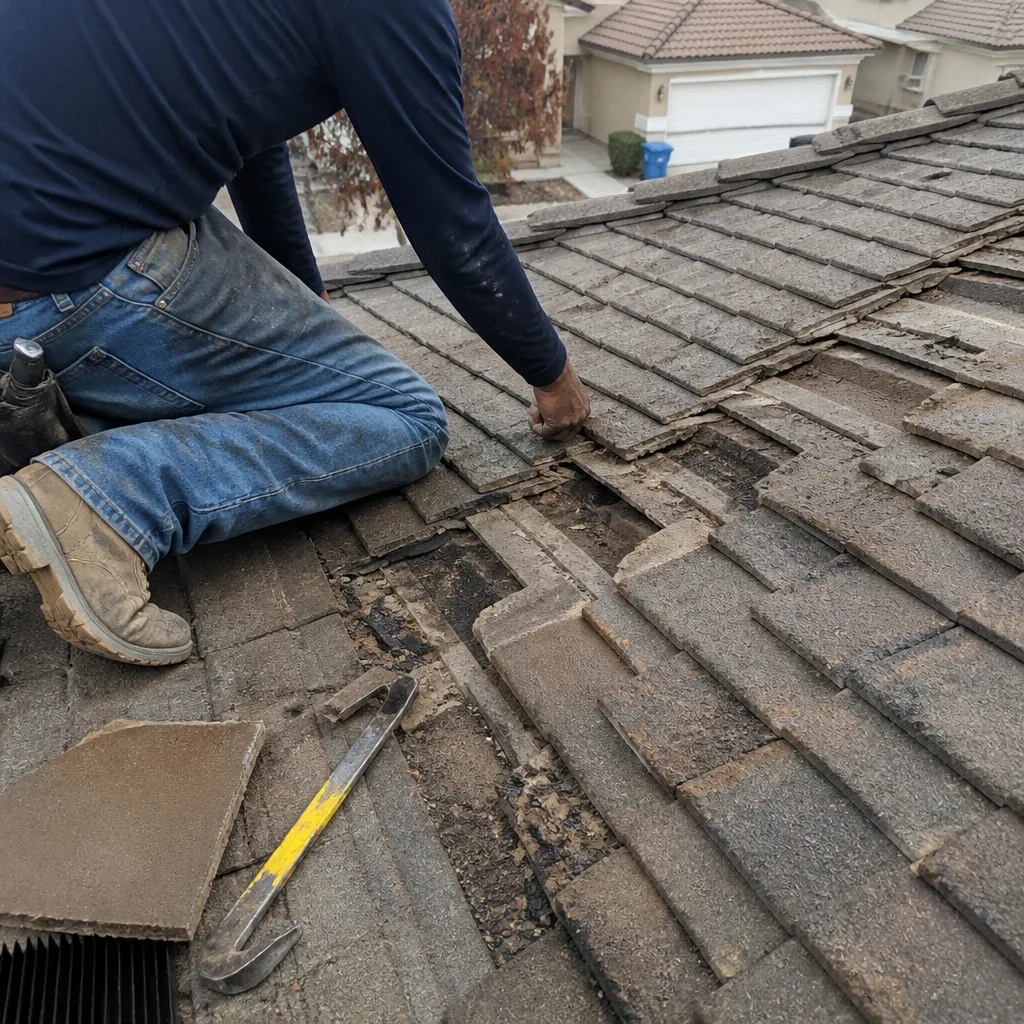 Before
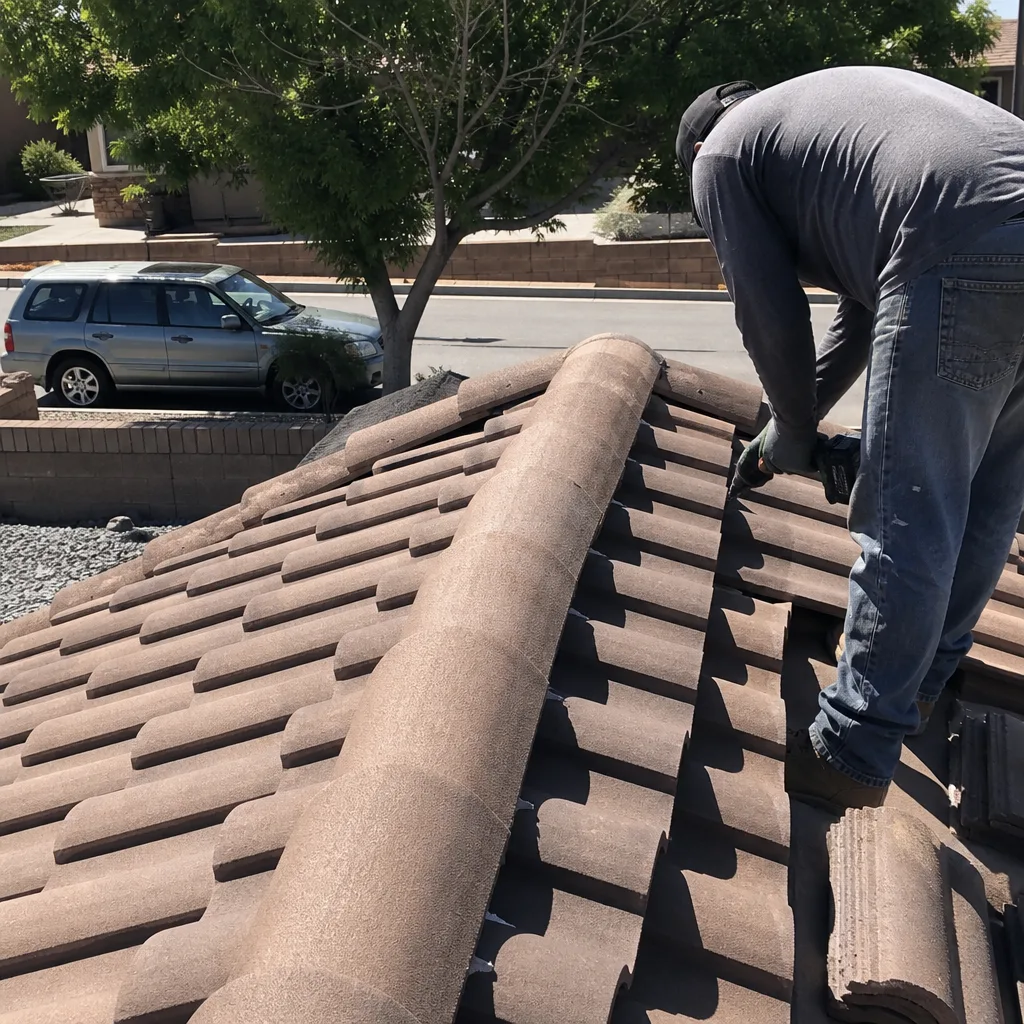 After
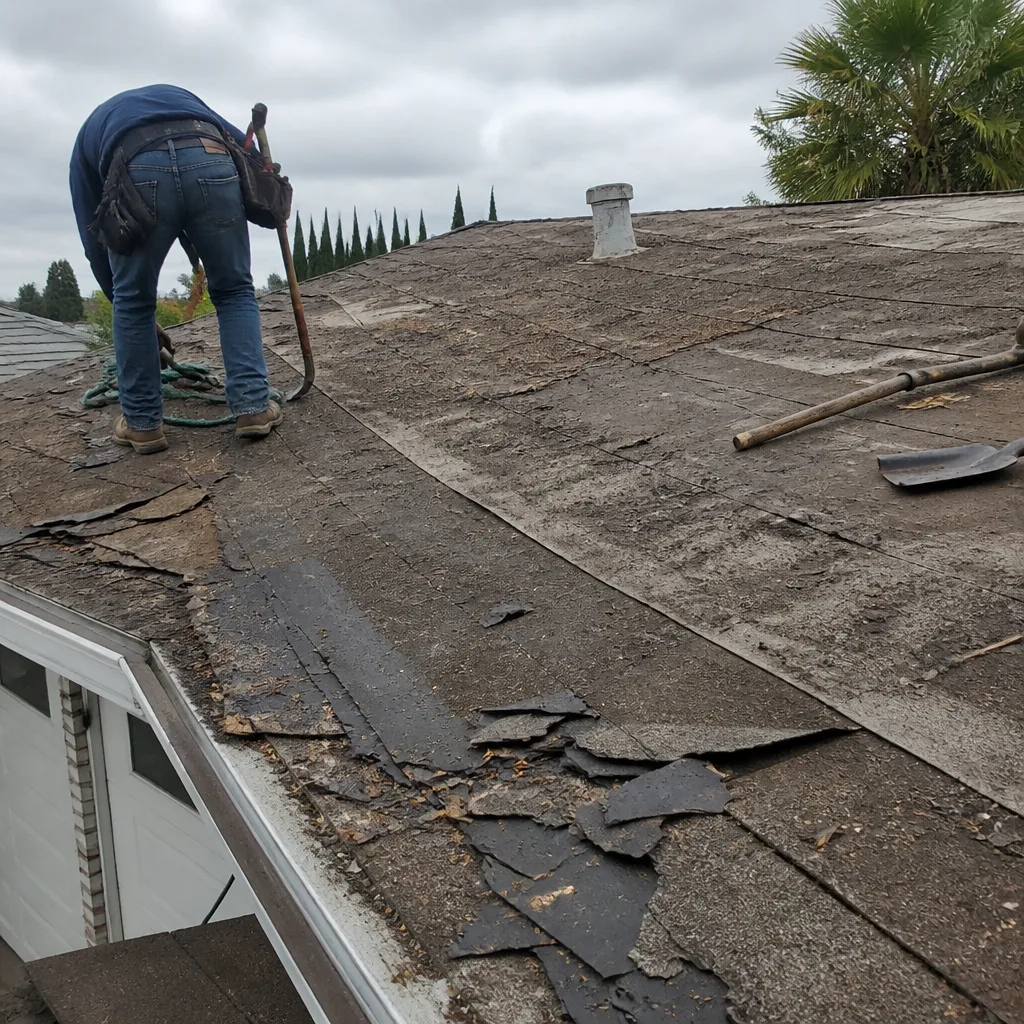 Before
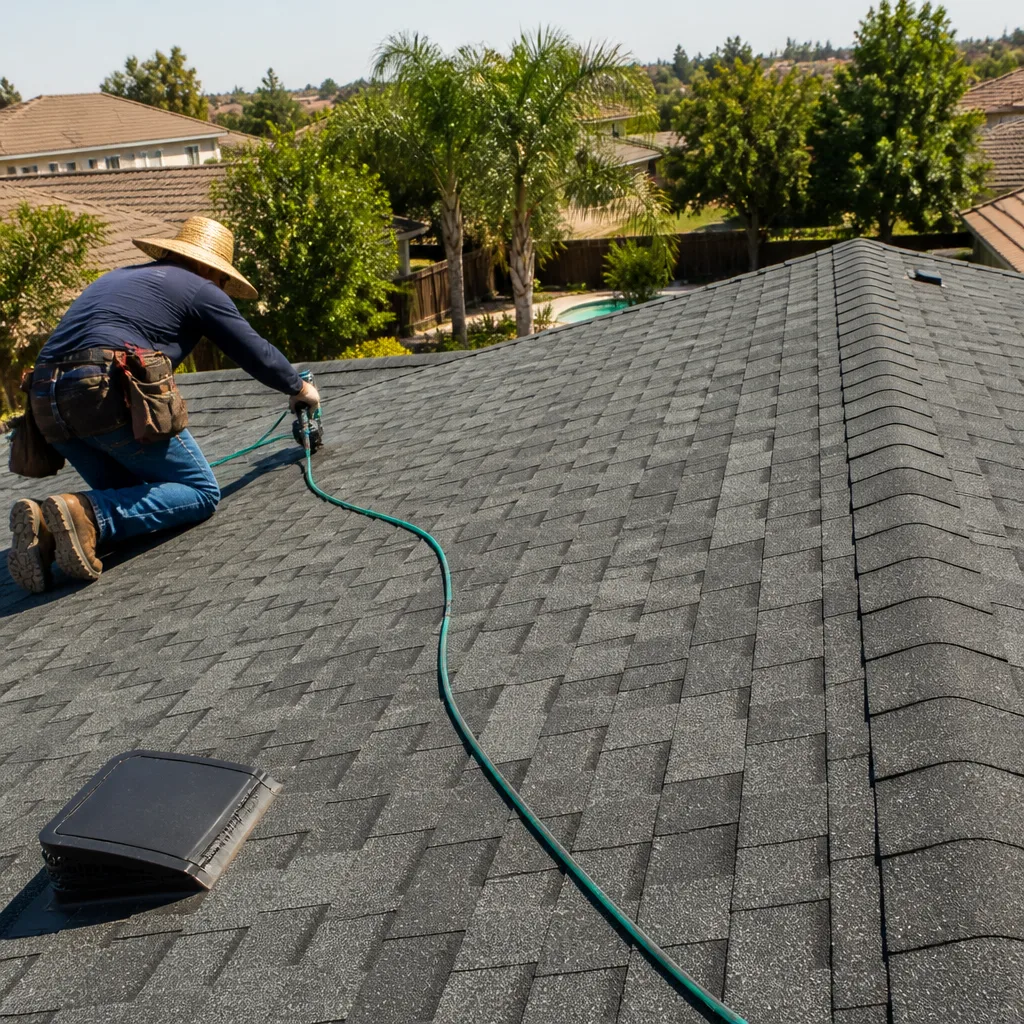 After
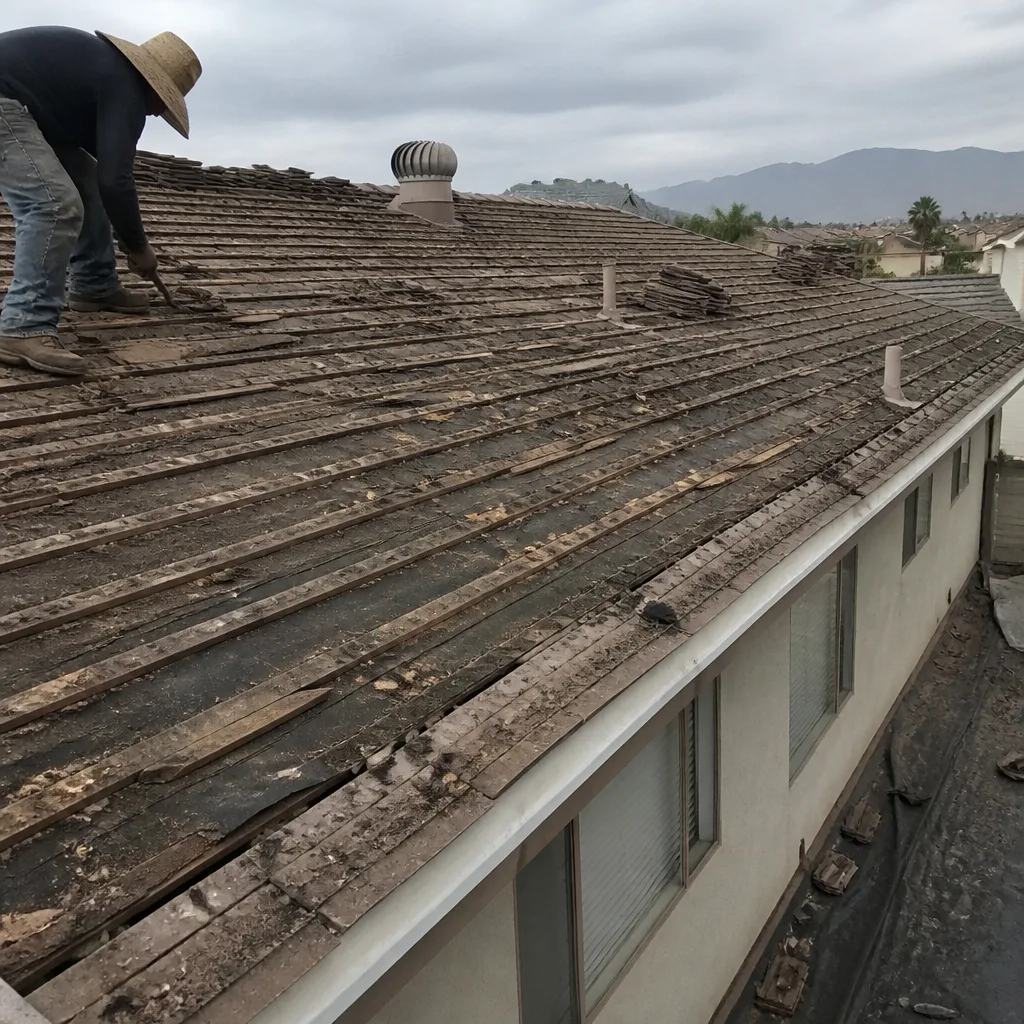 Before
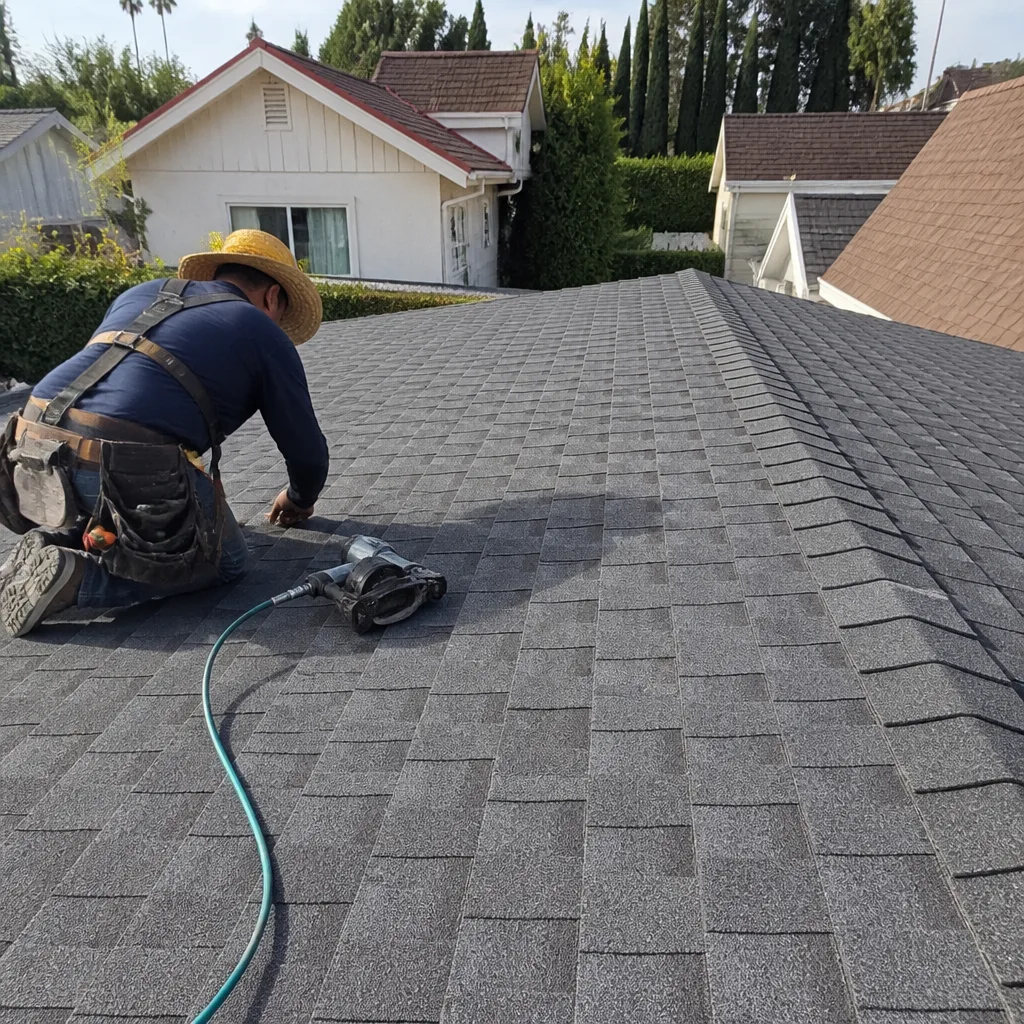 After
Common Roof Replacement Problems We See in San Bernardino Homes
- Granule loss from UV and thermal cycling. Summer highs above 100°F bake asphalt shingles day after day, and the repeated expansion and contraction sheds granules faster than coastal roofs experience. Within 10 to 12 years, many San Bernardino roofs show bare patches where the fiberglass mat is exposed and water gets through.
- Ridge cap and flashing failure after Santa Ana events. Strong dry gusts pull at ridge caps, especially when the fasteners have corroded from years of heat and wind-driven dust. We see this most often on homes in the 92404 and 92405 ZIP codes where the original galvanized nails are decades old.
- Underlayment deterioration on low-slope sections. The flat and low-slope porch roofs on 1950s through 1970s stucco homes trap heat and collect dust, which breaks down the underlayment faster than the shingles above it. By the time a leak shows up on the patio ceiling, the underlayment is usually gone.
- Failing decking on older tract homes. Original skip sheathing and early plywood decks often rot or sag after 40 or 50 California summers. A roof replacement that doesn’t address the deck is a warranty claim waiting to happen.
Pricing for Roof Replacement in San Bernardino, CA
A full tear-off and asphalt shingle roof replacement in San Bernardino typically runs $9,800 to $16,500 for a standard single-story home. Architectural shingles add material cost and run $13,000 to $24,500. Flat roof replacement lands between $8,500 and $18,000. What moves the number: roof pitch (steeper costs more in labor), whether you have skip sheathing that needs a new plywood deck, how many layers have to be torn off, and whether you want a standard or high-wind fastening spec. We give written line-item quotes so you can compare what each contractor is actually proposing, including fastener type and flange material. Call (855) 382-1073 to schedule a free estimate, and we’ll walk you through the numbers in plain English.
We Also Serve Cities Near San Bernardino
If you’re in Muscoy, Highland, Loma Linda, or Rialto, we cover those areas too. The same inland heat and wind patterns affect roofs across the whole corridor, and our Roof Replacement team knows the housing stock in each of these communities. For details specific to your neighborhood, see our page on Roof Replacement in San Bernardino or call us directly at (855) 382-1073.
Serving San Bernardino, CA — Our Local Coverage Area
We’re based in the San Bernardino area and know this community well. Use the map below to see our service coverage — if you’re nearby, we can almost certainly help.
FAQs About Roof Replacement in San Bernardino
Inland heat and Santa Ana winds accelerate corrosion on standard galvanized nails and flashing. Years of 100°F-plus summer days combined with wind-driven dust strip the protective coating and expose the steel to moisture from winter rains. Stainless steel or hot-dip galvanized fasteners resist this corrosion and hold the roof together through decades of Santa Ana cycles. If you’re comparing quotes, ask what fasteners each contractor specifies. The cheaper coastal-spec nails fail years earlier here, and the rework cost far exceeds the initial savings. Call (855) 382-1073 and we’ll show you the difference in writing.
Skip sheathing is a spaced board deck, typical on pre-1980 San Bernardino homes, where the boards sit with gaps between them instead of forming a solid surface. Modern shingles and underlayment need solid nailing, so a proper roof replacement in the 92404 ZIP requires installing plywood or OSB decking over the spaced boards first. Some contractors will shingle directly over skip sheathing to keep the bid low. That voids the manufacturer’s wind warranty and leaves your roof vulnerable in the first Santa Ana event. We recently replaced a roof on a 1958 stucco home in the 92405 ZIP code after a Santa Ana wind event tore off several ridge caps and exposed the original skip sheathing. Our crew removed the old three-tab shingles, installed a new layer of plywood decking over the spaced boards, and used GAF Timberline architectural shingles with stainless steel nails and a high-wind nailing pattern to meet the 130 mph rating.
Ask each contractor to itemize the fastener type, flashing material, underlayment grade, and nailing pattern in the written quote. Coastal-spec bids will list standard electroplated nails, galvanized flashing, and a four-nail pattern. Inland-spec bids from us will line-item stainless or hot-dip galvanized fasteners, hot-dip galvanized drip edge and ridge vent, and a six-nail high-wind pattern. The inland-spec quote runs 8 to 12 percent higher on materials, but it’s built for San Bernardino conditions. The cheaper quote costs more within a decade when the fasteners rust and the ridge caps lift. For an apples-to-apples comparison, call (855) 382-1073. We’ll explain what every line item means.
Santa Ana winds hit ridge caps and flashing at the roof’s most exposed points, and when the fasteners underneath have corroded from years of inland heat and dust, the caps lose their grip. The first sign is usually missing or lifted ridge caps found in the yard after a wind event, often the same day the winds die down. Prevention comes down to fastening: stainless or hot-dip galvanized nails, a high-wind nailing pattern, and ridge caps installed with enough overlap to resist uplift. If you’re seeing lifted caps or nail pops along the ridge line, get it addressed before the next wind season. Estimates are free at (855) 382-1073.
A high-temperature synthetic underlayment holds up better in San Bernardino than standard felt, which dries out and cracks under sustained 100°F summers. Synthetic underlayment resists UV exposure during the reroof process and doesn’t tear as easily in wind. For low-slope sections like porch and patio roofs, we prefer reinforced, high-temperature-rated synthetic underlayment or a self-adhered membrane depending on the pitch. The underlayment is the last line of defense before water reaches your decking, and it fails quietly here. Call (855) 382-1073 and we’ll show you what we put under the shingles and why it matters inland.
If your roof is showing granule loss, curling shingles, lifted ridge caps, or interior water stains in San Bernardino, don’t wait for the next Santa Ana to tell you what you already suspect. Barnwood Roofing works on San Bernardino roofs because we know the houses, the heat, and the wind here. Inspection first, recommendation second. Call (855) 382-1073 to schedule your free estimate.
Written by Ruben Calloway, Owner at Barnwood Roofing, serving San Bernardino since he first picked up a nail gun.