
Last updated October 30, 2026
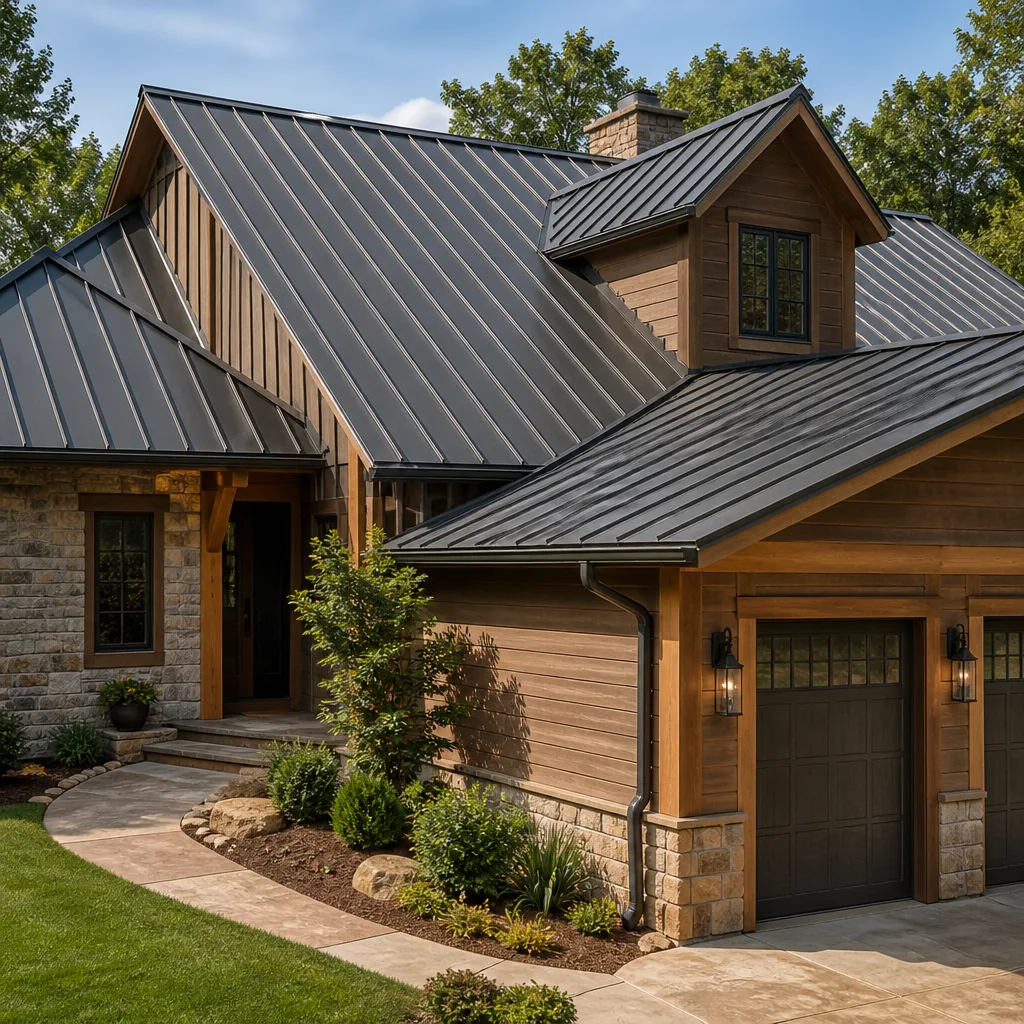 Metal roofing
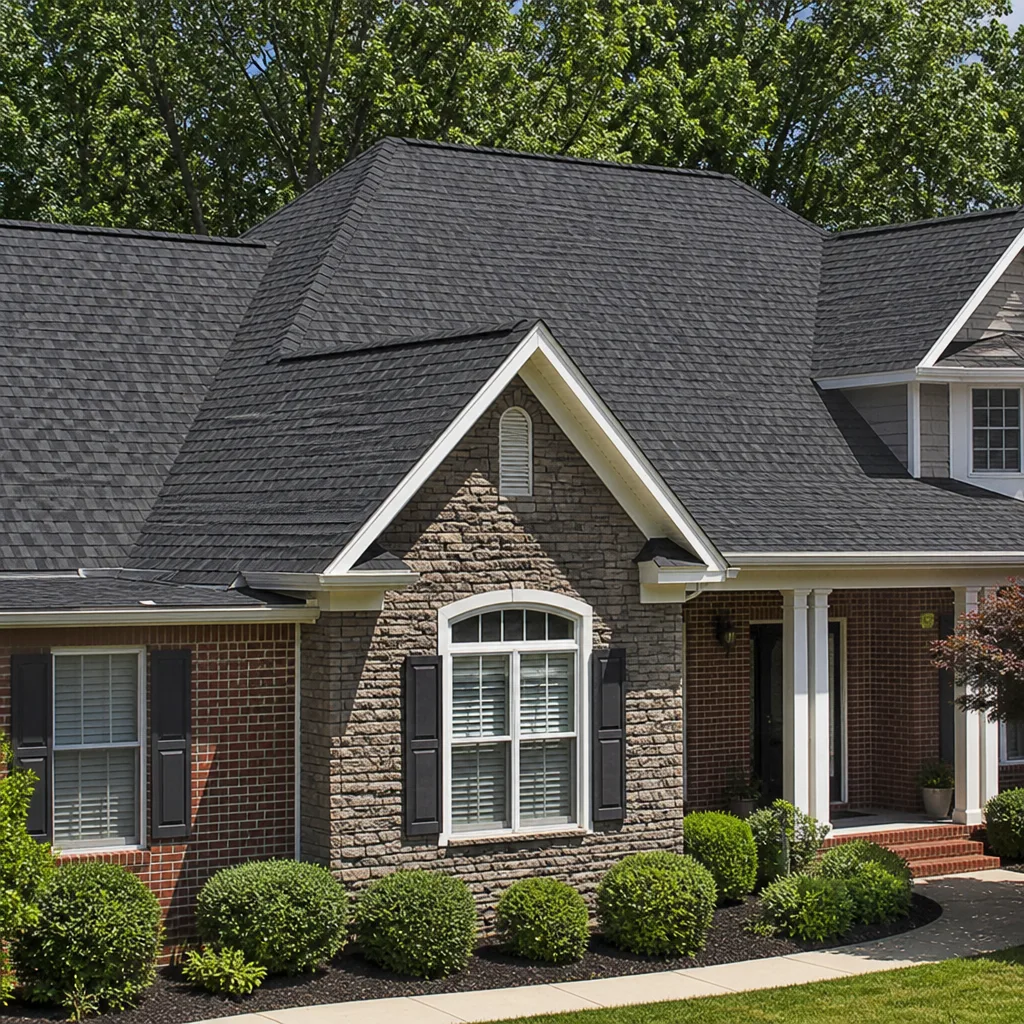 Architectural shingles
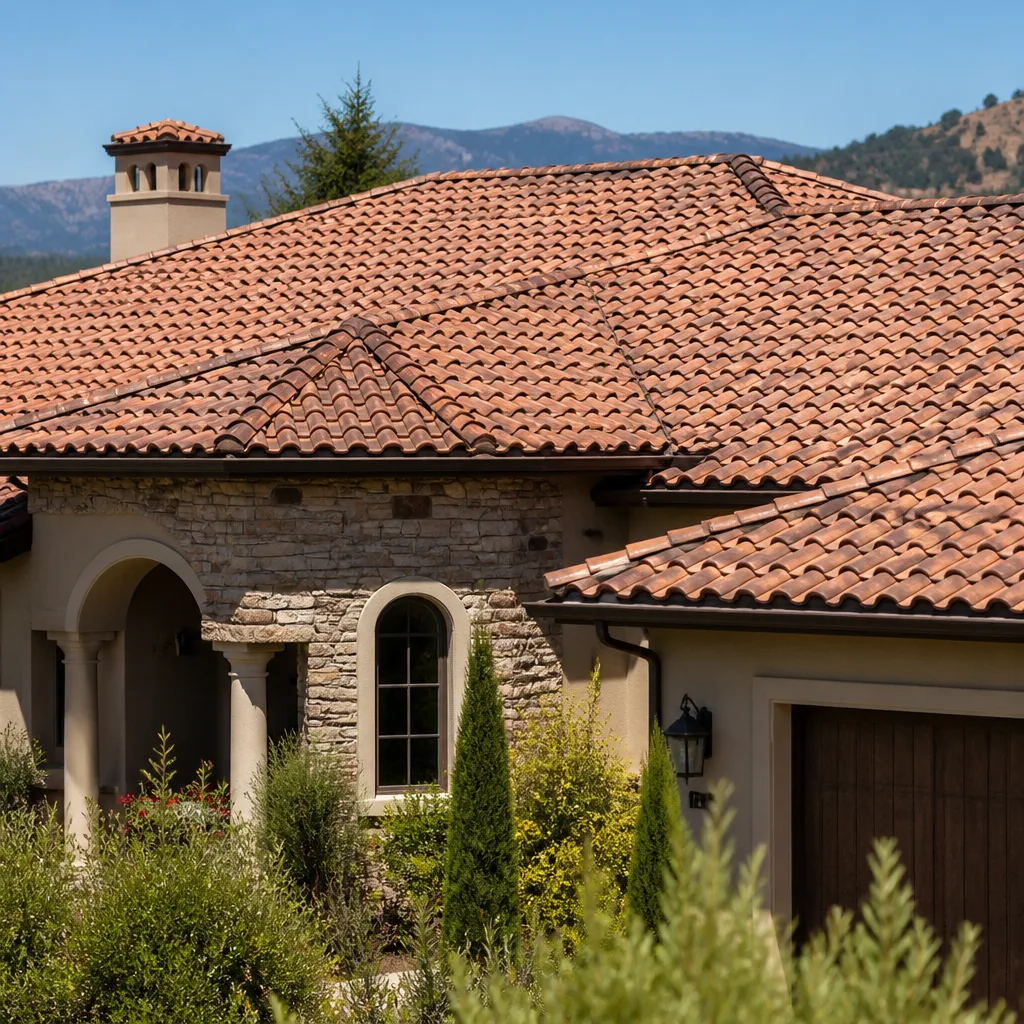 Tile roofing
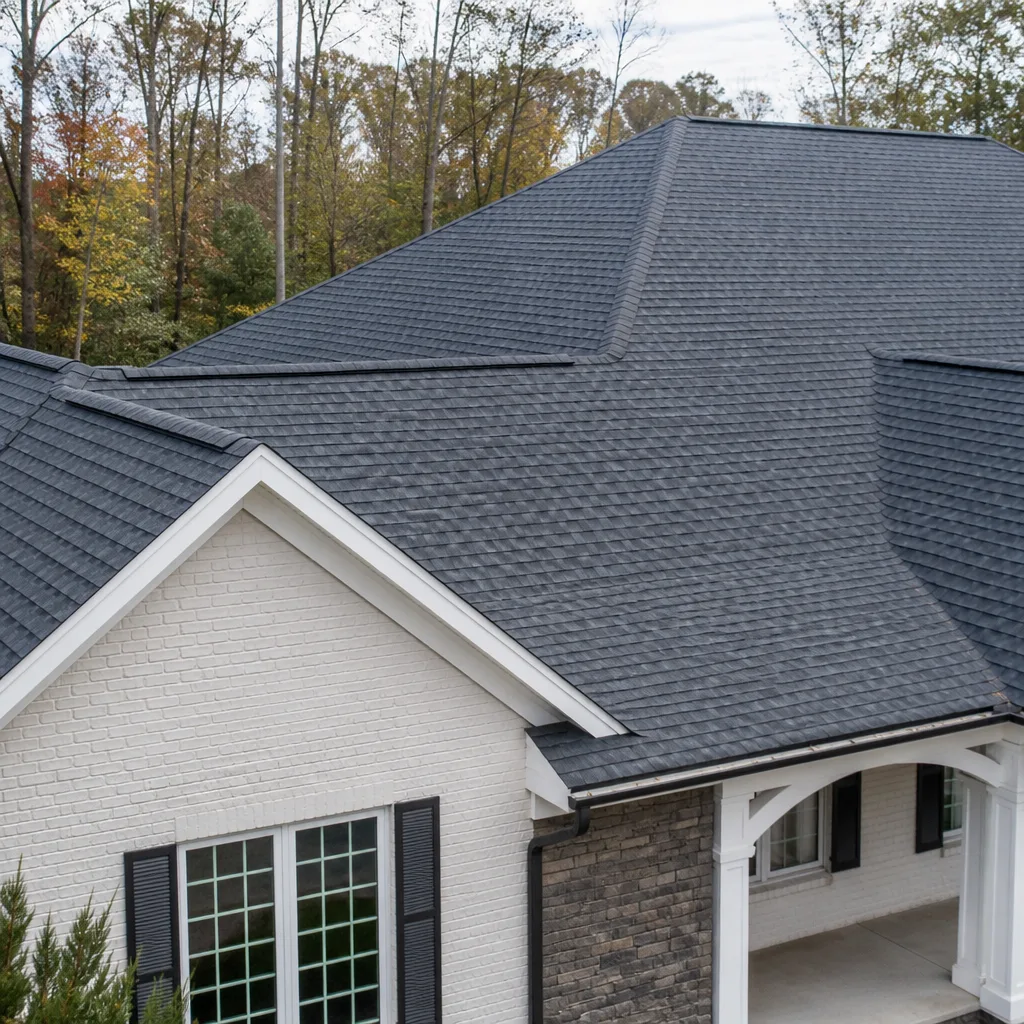 GAF
 Owens Corning
 Flat & low-slope
Free roof inspection with deck photos before we talk money - GAF and Owens Corning certified installation
Roofing Warning Signs: A Fontana Homeowner’s Reference Guide
Most roofing guides tell you to look for missing shingles and water stains on the ceiling. By the time either of those appears, the failure behind them is typically 18 to 36 months old. What we’ve learned from inspecting thousands of Fontana roofs is that the earliest warnings are subtler: granule accumulation patterns in your gutters, flashing that’s pulling away from the chimney by a quarter inch, shingles that cup upward instead of curling at the edges. This guide will teach you to read those signs before moisture ever enters the building envelope. It’s the difference between a $400 repair and a $14,000 replacement.
Styles & brands we work with
Quick Answer
The most important roofing warning signs for Fontana homeowners are granule loss visible in gutters and downspouts, flashing separation around chimneys and HVAC curbs, shingle cupping or curling, attic heat that lingers past 10 PM, unexplained utility bill increases, and paint peeling near roofline walls. Any one of these deserves a professional evaluation. Two or more mean you should schedule an inspection within the month, because Fontana’s UV intensity and thermal cycling accelerate roof degradation faster than most national averages suggest.
Table of Contents
- Granule Loss: Reading the Timeline in Your Gutters
- Flashing Separation: Fontana’s Highest-Probability Failure Point
- Cupping vs. Curling: Two Different Failure Modes
- Interior Warning Signs Most Homeowners Misattribute
- Using Satellite Imagery to Check Your Own Roof
- Why Fontana’s Climate Accelerates Roof Aging
- Age, History, and What They Signal
- Common Mistakes to Avoid
- When to Call a Professional
- Frequently Asked Questions
- The Bottom Line
Granule Loss: Reading the Timeline in Your Gutters
Granule loss is the single most reliable early indicator of roof aging, and Fontana homeowners are in a better position than most to monitor it. Our dry season runs long, which means granules accumulate in gutters for months without rain to wash them away. What you see in a Fontana gutter in October is a running total of shedding since the last significant rainfall, not a single storm’s worth of loss. That’s actually useful data.
Here’s how to interpret what you find:
- A thin, even dusting of granules in the gutter trough, especially on a roof under 10 years old, is normal manufacturing shed. New shingles lose surface granules during the first two years as they settle. This is not a warning sign.
- Quarter-inch piles at downspout outlets signal accelerated wear. Something is happening above that particular downspout, and it’s worth looking up.
- Granules mixed with visible shingle fragments or a sandbar-like accumulation after a roof is 12 to 15 years old means the shingle mat is oxidizing and breaking down. The roof is in its final third of service life in Fontana’s climate.
- Consistent granule accumulation every dry season, year after year, with no reduction after year three, is a pattern we associate with poor attic ventilation. Heat trapped underneath the shingles cooks the asphalt from below and drives granules off at a faster rate than UV exposure alone.
One distinction matters more than people realize: granule loss is normal. Granule loss that accelerates from year to year on the same roof is the warning. If you’re not sure which category you’re in, bag a sample of what’s in your gutter and bring it to a roofer who offers standalone Roof Inspection in Fontana. Under magnification, the granule size and shingle fragment concentration tell a more precise story than the naked eye can read.
We also tell Fontana homeowners to check the north-facing downspouts specifically. South-facing roof planes in Southern California take the heaviest UV load, but north-facing planes hold moisture longer after winter rains. Granule loss patterns that differ noticeably between north and south gutters on the same roof often point to ventilation or drainage asymmetry, not just sun exposure.
Flashing Separation: Fontana’s Highest-Probability Failure Point
Flashing is the metal material that seals the joints where your roof meets anything vertical: chimneys, plumbing vent pipes, HVAC curbs, skylights, and partition walls. In Fontana, flashing separation is the highest-probability failure point on any roof over a decade old, and the reason comes down to thermal physics.
Fontana routinely swings 40 degrees between midday and overnight temperatures during summer. That daily expansion and contraction cycle works like a slow pry bar on metal flashing. Over the course of a single year, the metal flexes thousands of times. After ten or fifteen years, caulking bonds crack, fasteners loosen, and the flashing pulls away from the surface it’s supposed to protect. What starts as a 1/8-inch gap that lets in no visible water becomes a 1/4-inch gap that lets in enough moisture to rot the decking underneath, and the homeowner never sees it from the ground.
Here’s a step-by-step method for checking flashing from a ladder (never from the roof itself, and never without someone holding the ladder):
- Set your ladder at the chimney if you have one, or at the roofline near the HVAC curb if you can reach it safely.
- Look at the metal-to-brick or metal-to-stucco joints first. These fail before metal-to-shingle joints because of differential expansion rates between unlike materials.
- Check the caulking bead. If you see cracking, alligatoring, or any gap between caulk and surface, the seal has failed even if water hasn’t entered yet.
- Run your eye along the top edge of the flashing. The step flashing should sit tight against the vertical surface. A gap as narrow as a credit card is the early warning.
- Look at the base flashing where it meets the shingle course. Lifted corners or rust staining at fastener points indicate movement and moisture penetration.
What to do if you find separation: do not caulk over failing caulk. Adding a fresh bead over cracked material doesn’t restore the bond. The failure has to be cut out, cleaned, and redone. This is a repair, not a replacement issue in most cases, and it’s exactly the kind of work a repair-focused roofer will catch during a Roof Inspection in Fontana before it becomes a leak.
In newer Fontana construction, we see a second flashing-related issue: solar panel mounting feet and satellite dish anchors with flashed bases that were installed by non-roofing trades. These penetrations often leak within five to seven years because the flashing detail was treated as an afterthought. If your home has rooftop solar, checking beneath and around each mounting foot should be part of your annual roof check.
Cupping vs. Curling: Two Different Failure Modes
Homeowners tend to lump cupping and curling together as “old shingles.” They’re actually distinct conditions with distinct causes, and the difference determines whether your issue is cosmetic or structural.
Cupping looks like a shingle that’s rising at the edges and edges of the center, forming a shallow valley down the middle. In Fontana, we associate cupping primarily with moisture from below: under-ventilated attics, trapped humidity, or a decking layer that’s absorbing and releasing water with temperature swings. The shingle shrinks unevenly because its top and bottom surfaces are drying at different rates. Cupping is also strongly associated with shingles installed over wet or warped substrate.
The critical point about cupping: it’s usually an indicator of a systemic problem. If you have widespread cupping across multiple roof planes, the shingles are reacting to conditions inside the roof assembly, not just aging. Fixing ventilation or moisture intrusion may be the real fix. Replacing shingles without addressing the underlying condition means the new shingles will cup too, often within three to five years.
Curling looks like the tab edges of the shingle lifting upward, as if the corners are peeling away from the roof surface. This is primarily UV degradation from above. The asphalt in the shingle oxidizes over years of direct sun exposure, loses its flexibility, and the tab lifts at the points of least adhesion. Curling is most common on south- and west-facing planes.
Curling on a roof that’s otherwise in good condition can sometimes be repaired by re-adhering the lifted tabs, provided the shingle hasn’t stiffened past the point where it will crack instead of lay flat. Curling across an entire roof plane, especially combined with granule loss or cracking, means the shingles are at end of life. A roof sees full Fontana sun exposure roughly 300 days per year, and once the asphalt loses its plasticizer, no amount of patching will restore it.
Here’s the comparison in plain terms:
- Cupping: edges up, center down, caused by moisture from below, often fixable by correcting ventilation.
- Curling: corners and tabs lifting, caused by UV degradation from above, generally not reversible.
- Both together: the roof has multiple simultaneous issues, and replacement is the more honest recommendation than another round of repairs.
If you’re seeing either condition on more than 20% of any given roof plane, that’s the threshold where we recommend calling for an evaluation. Under 20% and isolated, it may be addressable through repair. The only way to know for certain is for someone to get eyes on the actual roof surface, not just a ground-level photograph.
Interior Warning Signs Most Homeowners Misattribute
The most valuable warning signs are the ones that never get reported because homeowners don’t connect them to the roof at all. We see these three misattributions at least once a week in Fontana:
Attic heat that lingers past 10 PM. Fontana cools down at night, even in summer. If your attic is still warmer than the outside air at 10 PM, your roof is absorbing and storing heat at a rate that exceeds what your ventilation can exhaust. Over years, that trapped heat accelerates shingle degradation, dries out attic framing, and raises your cooling bills. What homeowners usually do: ignore it, because who goes in the attic at 10 PM? What we suggest: check attic temperature once a month during summer. If it’s still 10-plus degrees hotter than outside air two hours after sunset, schedule a ventilation assessment. The fix is often as simple as adding ridge vents or correcting soffit vent blockage, and it can add years to the life of the shingles above.
Unexplained utility bill spikes. A roof’s primary job is shedding water, but its second job is forming the top of your home’s thermal envelope. When shingles lose their granule coating, the underlying asphalt absorbs more solar energy. When attic ventilation is compromised, that heat transfers into your living space. The result shows up on your SCE bill as an increase you can’t explain through rate changes or usage habits. If July and August cooling costs rise 15% or more year over year without a corresponding rise in outside temperatures, your roof assembly is losing thermal performance. That’s a roofing issue, not just an HVAC issue.
Paint peeling near roofline walls. Peeling paint on uppermost wall surfaces, especially on south and west exposures, often signals a roof edge leak. Water enters at the eave or rake edge, travels down through the top plate, and wicks into the wall cavity. The visible symptom is exterior paint failing from the inside out, or interior paint bubbling near the ceiling line in upstairs rooms. Homeowners typically assume the paint was faulty or the surface wasn’t prepped. In Fontana, where stucco walls meet asphalt shingle roofs, this is a flashing and edge-detail failure problem in the majority of cases we investigate.
All three of these signs share one trait: none of them looks like a roof problem to a homeowner, but all of them point upward. The roof is the part of your house you interact with least directly, which is why these indirect signals are worth learning to read. Building material manufacturers like GAF and CertainTeed publish extensive documentation on ventilation and thermal performance thresholds, and the numbers consistently show that under-ventilated Southern California attics shorten effective shingle service life by a measurable margin.
Using Satellite Imagery to Check Your Own Roof
You don’t need to climb on your roof to get a useful view of it. Free satellite imagery from Google Earth and similar platforms gives you an overhead perspective that can reveal ridge line irregularities, obvious plane deformation, and color differentials that indicate patchwork repairs from previous owners. Here’s a step-by-step process we recommend for Fontana homeowners:
- Open Google Earth or Google Maps and locate your address. Use the satellite view, not the street view.
- Zoom to a scale where the roof fills most of the frame. Note the image capture date in the tool, because seasonal shadow differences can mimic discoloration.
- Trace the ridge line with your eye. Any sag between rafters, any break in the straight line of the ridge, or any area where the ridge appears to dip below the plane of the rest of the roof is a structural flag worth a professional look.
- Compare the four roof planes for color consistency. Uniform darkening on south and west planes is UV aging. Patchy, irregular darkening in isolated spots is more likely a moisture or repair issue.
- Look for things that should not be there. Missing sections, tarp remnants, mismatched shingle colors, areas where debris has accumulated, or lines that suggest a repair was made with different materials.
- Run the same check on a neighboring house of similar age and construction. Fontana tracts often have dozens of homes with identical roof systems. If your roof looks materially different from the same-age house next door, that’s a signal worth investigating.
One common satellite finding in Fontana: ridge cap shingles that appear lighter than the field shingles on the planes below. That’s normal aging, because ridge caps sit at the highest point of the roof and take full sun from both sides. But if the ridge appears broken, offset, or visibly undulating, that’s the early stage of ridge cap failure. Ridge cap replacement is one of the least expensive roof repairs, and it’s also one of the most important because water entering at the ridge can travel down through both roof planes before it shows up anywhere inside.
Satellite imagery has a limitation worth stating plainly: it’s a two-dimensional tool for a three-dimensional problem. You cannot see flashing condition, shingle seal integrity, or granule loss from a satellite photo. What you can see is gross geometry and obvious color shifts, and those are the first filters for deciding whether a closer look is worth paying for.
Why Fontana’s Climate Accelerates Roof Aging
National roofing lifespan estimates assume an average climate. Fontana is not an average climate. What we experience here is a specific combination of stressors that ages roofs faster than the same materials would age in most of the country.
The first stressor is UV intensity. Fontana sits at roughly 1,200 feet elevation in the Inland Empire, and our clear-sky days far outnumber cloudy ones. The south- and west-facing planes of a typical Fontana home receive direct, high-intensity sun for 300-plus days per year. UV radiation is what oxidizes asphalt, and oxidation is the chemical process that turns flexible shingles into brittle ones. A roof that would last 25 years in Seattle or Portland may reach the end of its usable life in 18 to 20 years here, all else equal.
The second stressor is our diurnal temperature swing. The worst thermal stress on a roof system isn’t the high temperature; it’s the daily change. Fontana routinely swings 35 to 45 degrees between afternoon peak and pre-dawn low during the summer months. That daily expansion and contraction works every fastened joint, every flashing seam, and every shingle seal strip. Over a 20-year roof life, that’s more than 7,000 thermal cycles. Expanded metal fatigue testing in roofing materials is built around a fraction of that number.
The third stressor is our rain pattern combined with air quality. Fontana’s winter rainfall comes in concentrated bursts with long dry periods between. That means debris, dust, and airborne particulates accumulate on roof surfaces during the dry season and get pushed into valleys, around flashing, and under lifted shingle edges when the rain finally arrives. The particulate load in Fontana’s air, some of it from the I-10 and I-15 corridors, accelerates the degradation of exposed sealants and granule adhesion.
The practical takeaway for a Fontana homeowner: if you’re using national averages for when a roof should be replaced, you’re operating on optimistic assumptions. A 20-year shingle installed in Fontana should be actively monitored starting at year 12 and evaluated seriously at year 15. That’s not a scare tactic; it’s what the local environment does to roofing materials.
Products from manufacturers like Owens Corning and CertainTeed publish separate performance specifications for high-UV regions, and the product lines that perform best in Fontana are those with enhanced UV inhibitors and higher-grade asphalt formulations. This is one area where brand selection genuinely matters, and where working with a contractor who can compare products across multiple manufacturers gives you options the single-brand shops can’t offer.
Age, History, and What They Signal
Sometimes the most important warning sign is not on the roof at all; it’s in your home’s paperwork. A roof’s age and installation history tell you what to look for before you even look.
Fontana’s building stock spans several distinct eras, and each era has characteristic roofing patterns. Homes built in the 2000s boom years, especially in the northern developments near the 210 corridor, often have original roofs that are now 18 to 24 years old. Those roofs are at or beyond their realistic service life in this climate, even if they look passable from the street. Homes built in the 2010s may have cheaper, builder-grade asphalt shingles installed at minimum code rather than at quality thresholds, and those roofs often show premature wear by year 10.
What to look for in your records:
- Installation date. More than 15 years old in Fontana means active monitoring. More than 20 means replacement is on the horizon even without visible symptoms.
- Material grade. Builder-grade three-tab shingles from the 2000s era are not comparable to architectural shingles from the same period. Three-tab roofs rarely make it past 15 years here.
- Re-roofing history. If the current roof was installed over the original roof rather than after a tear-off, the shingles above are aging faster. Heat trapped between layers accelerates degradation.
- Repair history. A roof that’s had three or more isolated repairs in different areas within a five-year window is a roof telling you it’s reaching the end, even if each repair was individually minor.
- Ventilation specs. If your attic has passive ventilation only, meaning no powered or ridge ventilation, the roof assembly runs hotter. This shortens shingle life and increases the likelihood of cupping.
When we inspect a Fontana home and find no documentation of the roof’s history, that absence itself is a warning sign. An undocumented roof means the previous owner may have cut corners, hired a now-defunct contractor, or installed materials without a permit. All three scenarios increase the probability of hidden problems.
If you don’t have your roof’s history, the city of Fontana’s building department can tell you whether permits were pulled for any roofing work at your address. No permit record for a roof that has clearly been replaced means the installation was unpermitted, and unpermitted roofing work in California has a higher correlation with improper flashing detail, skipped underlayment, and code violations that surface years later.
Common Mistakes to Avoid
- Waiting for a visible interior leak before investigating. By the time water stains appear on your Fontana ceiling, the roofing failure is typically 18 to 36 months old. Moisture has been working into the decking that entire time.
- Assuming a clean-looking roof is a healthy roof. Some of the worst Fontana roofs we inspect look fine from the street. Granule loss, flashing separation, and seal failure happen at angles you cannot see from the ground.
- Ignoring granule accumulation in the gutter. Many homeowners clean granules out and assume it’s normal. Volume and pattern matter. Ongoing accumulation that doesn’t taper after the roof’s third year is a signal.
- Treating ventilation problems as HVAC problems. If your upstairs rooms are hot and your attic is stifling after sunset, fixing the AC will not fix the roof. Under-ventilation destroys shingles from the underside.
- Caulking over failing flashing. Adding sealant over cracked caulk looks like a fix and does nothing. The old material must be removed for the new bond to hold.
- Replacing shingles without diagnosing why they failed. If moisture from below is the cause, new shingles over the same conditions will fail the same way, sometimes faster.
- Checking the roof only after storms. Fontana’s damage is incremental and cumulative, not event-driven. The annual inspection in the dry season catches more problems than the post-storm check.
When to Call a Professional
If you’ve read this far and recognized one or more of the warning signs in your own home, the next step is a professional assessment. Call a roofer when you see persistent granule accumulation beyond year three, flashing that’s pulling away from any vertical surface, cupping or curling across more than 20% of a roof plane, attic heat persisting after 10 PM, or unexplained utility bill increases that started without a corresponding change in weather or usage.
The good news is that most of these findings turn out to be repairable, not replacement-level. Barnwood Roofing offers free estimates in Fontana and we’ll tell you honestly if a repair is enough, because our Roof Repair in Fontana service is a core part of what we do, not a fallback for when replacement gets declined. We perform Roof Replacement in Fontana when it’s genuinely warranted, but we never recommend it when a repair will serve you better. Call (855) 382-1073 to schedule your free estimate.
Frequently Asked Questions
You’ll know by having the roof inspected by someone who performs both repairs and replacements, because that contractor has no financial incentive to recommend the bigger job. The deciding factors are granule loss severity, shingle flexibility, flashing condition, and whether failures are isolated or systemic. Replacement becomes the honest recommendation when repairs would cost more than 50% of a new roof’s cost or when the underlying shingle mat is too oxidized to hold new seals. Call (855) 382-1073 for an exact assessment of your Fontana roof.
How often should I inspect my roof in Fontana?
Inspect from the ground at least twice a year, once after the winter rains end and once before they begin. A professional Roof Inspection in Fontana is worth scheduling annually if your roof is over 12 years old in this climate, because Fontana’s UV intensity and thermal cycling age roofs faster than national averages. The inspection is the cheapest insurance you’ll ever buy against a five-figure replacement.
Minor roof repair in Fontana typically runs $250 to $800 for isolated issues like a few lifted shingles, a single flashing repair, or small-section ridge cap replacement. Mid-range repairs like multiple flashing points, valley seal work, or vent boot replacement range from $800 to $2,500. The final number depends on access difficulty, roofing material, and whether underlying decking needs attention. Call (855) 382-1073 for a free, written, line-item estimate on your specific repair.
A legitimate roof inspection is a standalone deliverable: a documented assessment of roof condition, recommendations ranked by urgency, and no requirement to book any work through the same company. Barnwood Roofing offers inspection as a standalone service in Fontana. We’ll present findings in writing and tell you what actually needs attention, what can wait, and what’s fine to leave alone.
The biggest under-discussed roofing problem in Fontana is attic ventilation. Under-ventilated attics trap heat that damages shingles from below, drives up cooling costs, and shortens roof life by years. It’s invisible from the ground, rarely mentioned in generic roofing guides, and responsibile for a large share of the premature roof failures we see in northern Fontana and Southridge-area homes built during the 2000s boom. The fix is often far less expensive than the failure it prevents.
A professional roofing company works from a written estimate that specifies scope, materials, and pricing before any work begins. Price changes happen only if inspection reveals hidden conditions that genuinely change the scope, and a trustworthy contractor documents that in writing and gets your approval before proceeding. Ask any Fontana roofer how they handle change orders before you sign anything. The answer tells you a lot about how they’ll treat you during the project.
The Bottom Line
Roofing failures in Fontana don’t announce themselves with drama. They develop quietly over years, through granule loss you can measure in your gutters, flashing gaps you can see with a ladder and a careful eye, and interior symptoms you’ve been attributing to something else. Learning to read these signs puts you ahead of the failure curve, and being ahead means more of your problems stay in repair territory instead of replacement territory. The roof over your head is the largest single system protecting your Fontana home, and it rewards attention at a fraction of the cost of neglect. When in doubt, get it inspected. The information costs less than any roofing project you’ll ever pay for. Call (855) 382-1073 to schedule yours.
Written by the team at Barnwood Roofing, serving Fontana since 2013.
See the difference
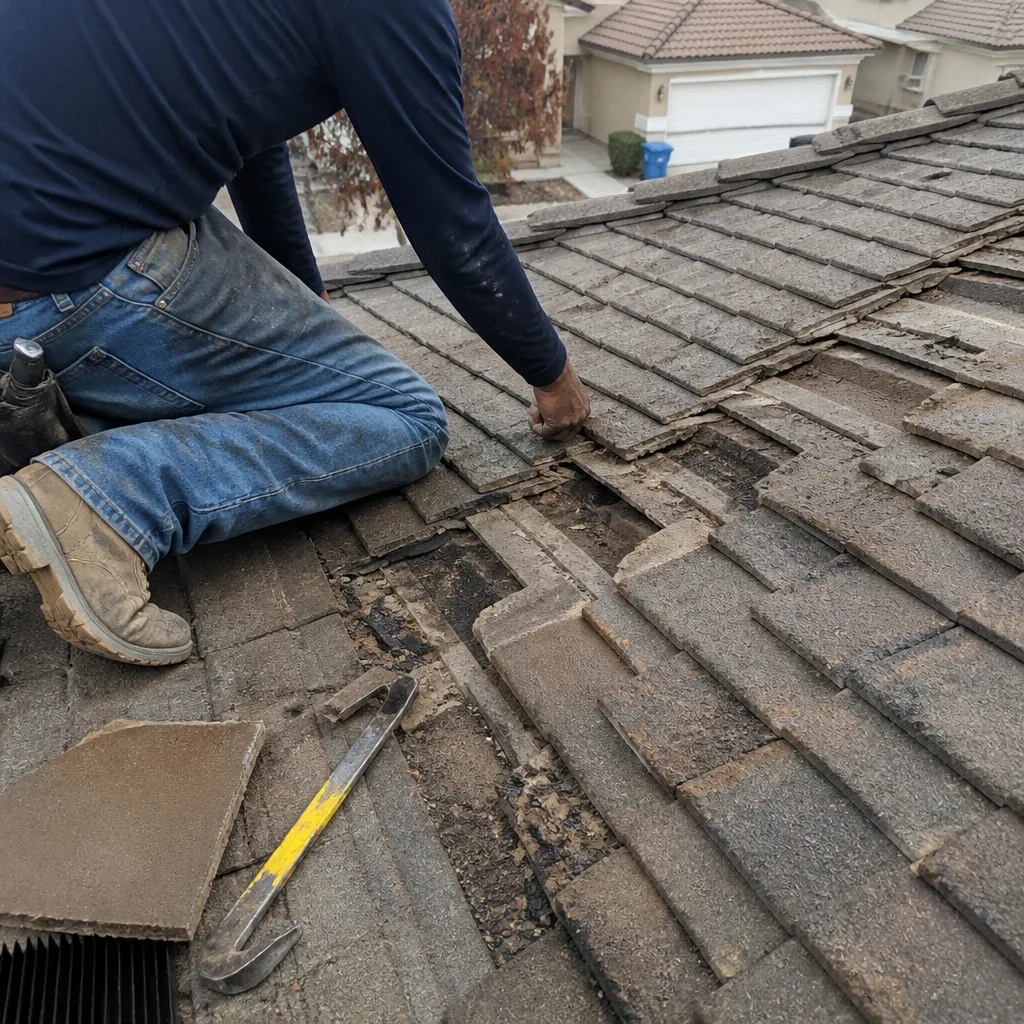 Before
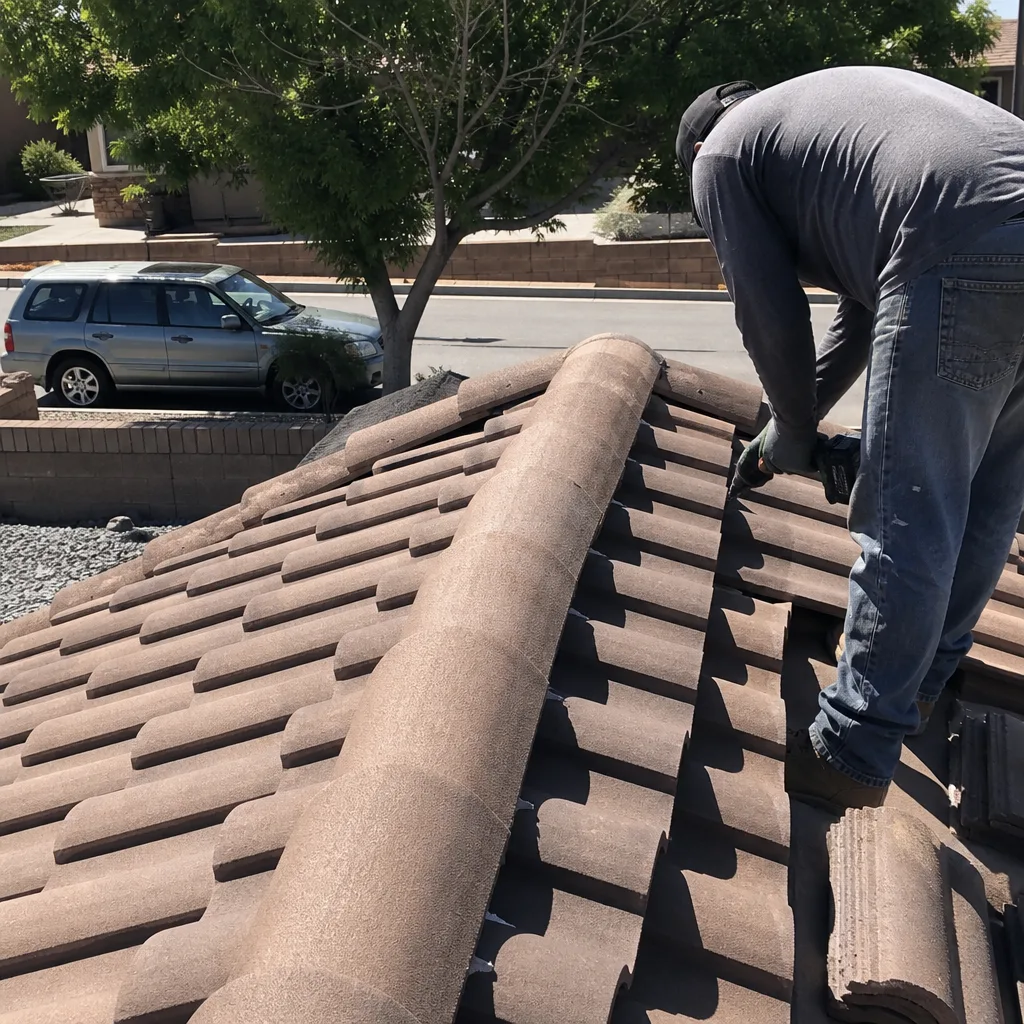 After
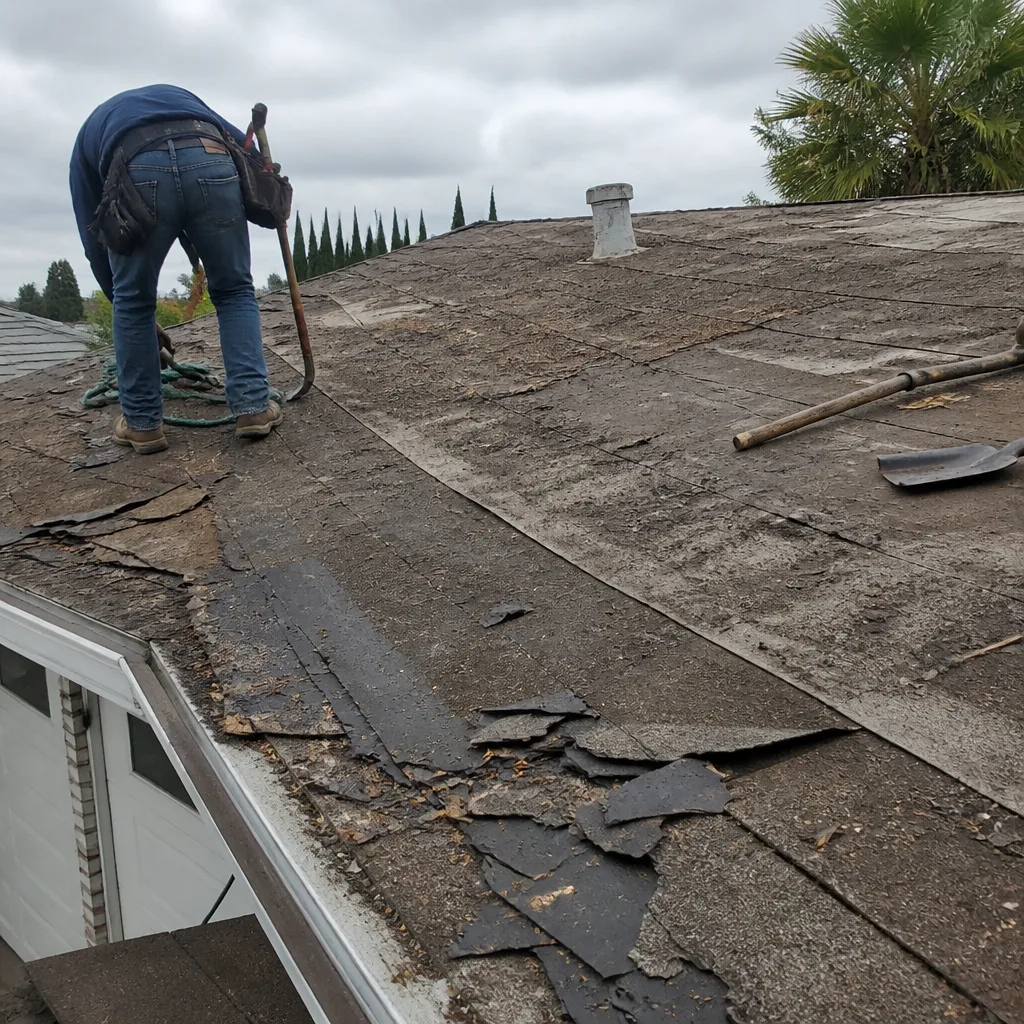 Before
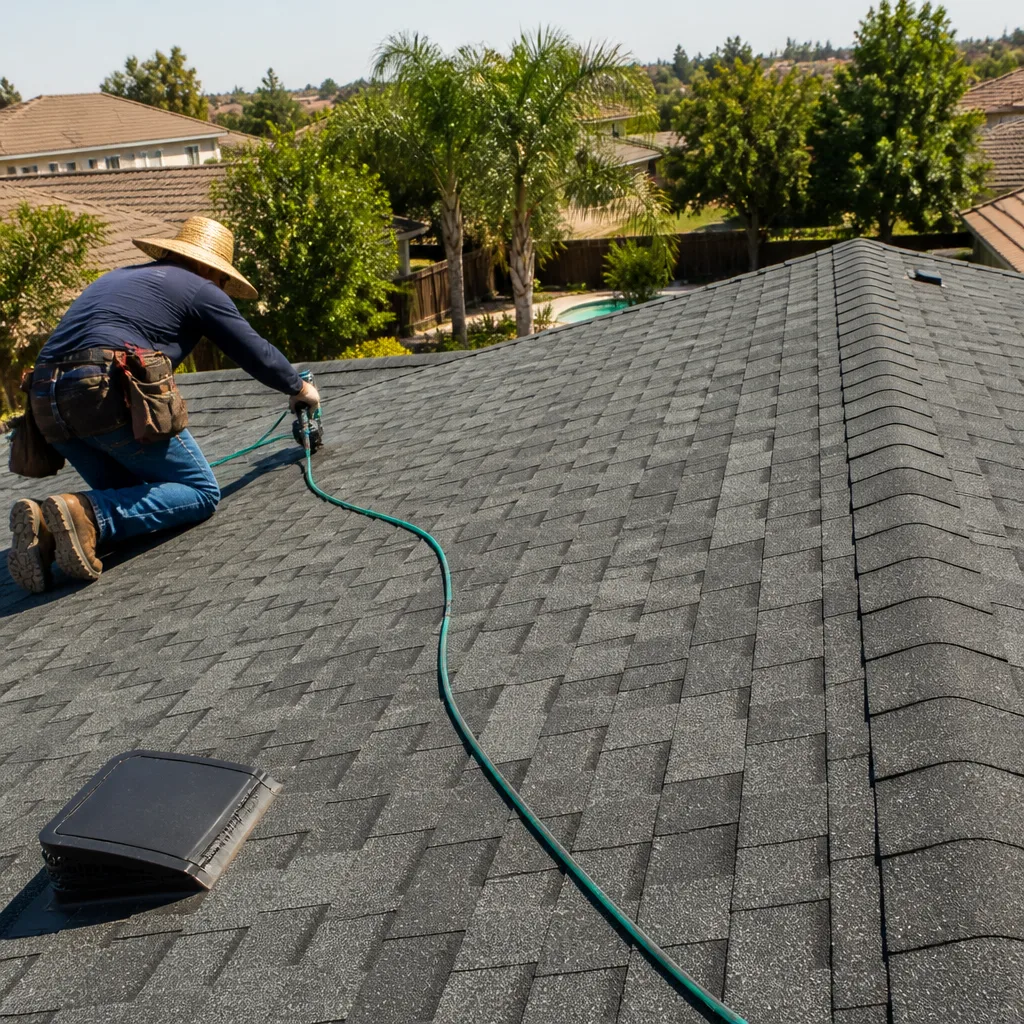 After
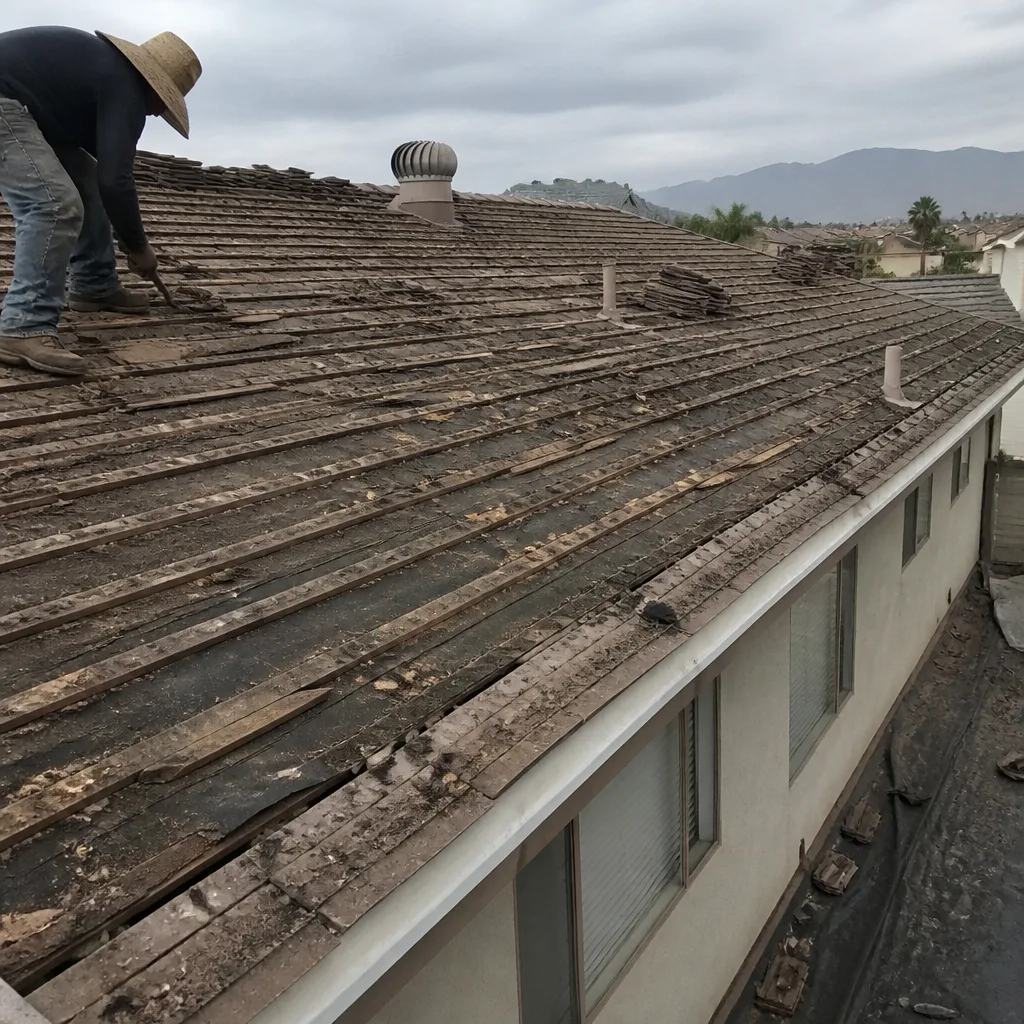 Before
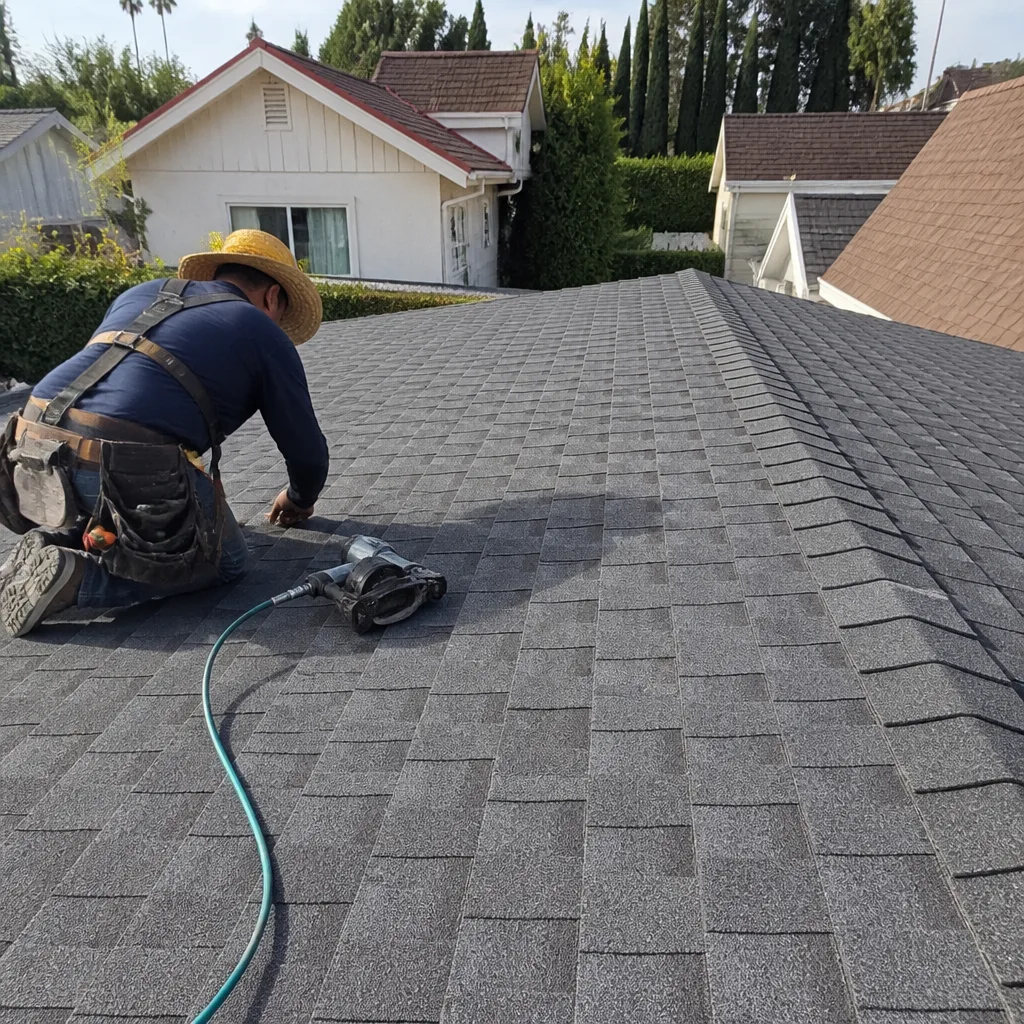 After